You’ve probably heard it before — the quiet voice in the back of your head that says, “I’d make a film if I just had the right gear,” or “I’ll start when I have enough money.”
Here’s the truth that Hollywood doesn’t advertise: some of the most iconic films in history were made with almost nothing. No studio backing. No professional crew. No expensive equipment. Just a story, relentless hustle, and the willingness to start anyway.
This article breaks down real low-budget filmmakers success stories — directors who launched careers from shoestring budgets — and extracts the exact lessons you can apply to your own filmmaking journey today. Whether you’re sitting on a half-written script or staring at your smartphone wondering if it’s enough, this guide is for you.
What Does “Making It” Actually Mean for a Filmmaker?

Before we dive in, it’s worth defining success — because “making it” doesn’t look the same for everyone.
For some filmmakers, success means:
- Festival recognition (Sundance, SXSW, Tribeca)
- Viral distribution (millions of YouTube views, social media buzz)
- A career launch (getting signed, landing an agent, directing their next film with a real budget)
- Financial return (turning a $7,000 investment into a multi-million dollar deal)
The good news? All of these paths are accessible to filmmakers who start with almost nothing. The case studies below prove it — and each one offers a different blueprint depending on your goals.
Why Creative Constraints Are Actually Your Competitive Advantage
Before we get into the case studies, there’s an important mindset shift to make.
Constraints aren’t obstacles — they’re creative filters.
When you have unlimited resources, you can overthink every decision. When you have almost nothing, you’re forced to:
- Solve problems creatively instead of throwing money at them
- Move faster with fewer approval layers and less logistics
- Build resourcefulness — arguably the most valuable skill in the film industry
- Focus on story rather than production spectacle
The filmmakers below didn’t succeed despite their limitations. Many of them succeeded because of them. Limited budgets forced them to develop a distinctive visual style, lean into character-driven storytelling, and finish their projects when others were still waiting for the “right moment.”
That psychological shift — action over perfection — is what separates the filmmakers who make it from the ones who don’t.
Case Study #1: Robert Rodriguez — El Mariachi (1992)
Budget: ~$7,000 | Box Office & Licensing: Millions
The Story
Robert Rodriguez didn’t wait for permission. When he wanted to make his first feature film, he enrolled in medical testing studies to raise the $7,000 budget for El Mariachi. He shot in a small town in Mexico using non-professional actors from the local community, borrowed equipment wherever he could find it, and designed every scene around what he already had access to.
The film was originally intended for the Spanish-language home video market — not Hollywood. But when Columbia Pictures discovered it, they acquired the rights and re-released it, launching one of the most remarkable careers in modern cinema.
What He Did Differently
Rodriguez famously documented his process in his book Rebel Without a Crew, which became a bible for DIY filmmakers worldwide. His approach was simple but radical:
- Write for what you have. Every location, prop, and character in El Mariachi existed before the script did. Rodriguez built his story around his available resources.
- Borrow everything. Equipment, locations, even a school bus used in a chase scene — none of it was rented through traditional channels.
- Embrace the limitations. The film’s rough, kinetic style wasn’t a flaw — it became a defining aesthetic.
Key Takeaways
✅ Write your script after you audit your resources, not before
✅ Your constraints can define your style — don’t fight them
✅ The DIY mindset isn’t a compromise; it’s a competitive edge
Case Study #2: Sean Baker — Tangerine (2015)
Budget: ~$100,000 | Shot Entirely on iPhone 5S
The Story
When Sean Baker decided to make Tangerine — a raw, vibrant story about two transgender sex workers on Christmas Eve in Los Angeles — he made a decision that shocked the industry: he shot the entire film on three iPhone 5S smartphones.
Using a $8 anamorphic lens adapter called the Moondog Labs attachment, Baker and his cinematographer Radium Cheung created a film that premiered at Sundance and earned widespread critical acclaim. It wasn’t a gimmick. The choice was deliberate — the iPhone’s small form factor allowed them to shoot guerrilla-style in real locations without drawing attention or requiring permits.
What He Did Differently
- Leveraged accessible technology. The iPhone wasn’t a fallback — it was the right tool for this story and this production style.
- Used real locations and natural lighting. Donut shops, streets, and cars became his sets. The naturalistic lighting matched the film’s documentary-style energy.
- Prioritized performances above everything. Baker spent extensive time with his non-professional leads, ensuring the emotional authenticity that made the film memorable.
Key Takeaways
✅ The camera in your pocket is a legitimate filmmaking tool
✅ Gear matters far less than your ability to direct authentic performances
✅ Small equipment = guerrilla access to real-world locations
Gear Worth Considering for Smartphone Filmmaking:
- Smartphone filmmaking rig/cage\]
- Anamorphic lens adapter for iPhone/Android\]
- External lavalier or shotgun microphone for smartphones\]
- Mobile video editing app\]
Case Study #3: Christopher Nolan — Following (1998)
Budget: ~$6,000 | Shot Over 12 Months on Weekends
The Story
Before The Dark Knight, before Inception, before Oppenheimer — there was Following. Christopher Nolan‘s debut feature was shot on weekends over the course of a full year because that was the only time his cast and crew (mostly friends) were available.
With a budget of roughly $6,000, shot in black and white on 16mm film, Following tells the story of a young writer who begins trailing strangers through London and gets pulled into a dangerous criminal underworld. The film’s nonlinear narrative structure — now a Nolan signature — wasn’t just an artistic choice. It was a practical solution.
What He Did Differently
- Used time as a resource. Most filmmakers think of production in terms of days and weeks. Nolan stretched his over 12 months, working only when everyone was available for free.
- Turned structure into a strength. The fragmented, nonlinear storytelling masked the logistical gaps between shooting days while adding layers of intrigue.
- Worked with friends. His cast and crew were people who believed in the project and worked without pay.
Key Takeaways
✅ Time can be a substitute for money — patience is a production tool
✅ Structural creativity can elevate a micro-budget film above its constraints
✅ Your immediate network is your first production team
Case Study #4: Kevin Smith — Clerks (1994)
Budget: ~$27,000 | Box Office: $3.2 Million
The Story
Kevin Smith maxed out multiple credit cards, sold his comic book collection, and used his own workplace — a convenience store in New Jersey — to make Clerks. He shot the film at night after his day shift ended, using the store’s existing lighting and a cast of friends and local actors.
The film was acquired by Miramax after premiering at Sundance and went on to gross over $3 million, becoming a landmark of 1990s independent cinema and launching one of the most recognizable voices in American film.
What He Did Differently
- Used his real environment. The Quick Stop convenience store wasn’t just a location — it was the heart of the film’s identity.
- Let dialogue do the heavy lifting. With minimal visual variety, Smith leaned into sharp, rapid-fire dialogue that carried the entire film.
- Finished the film. This sounds simple, but it’s the most important thing. Smith completed Clerks against significant odds and got it in front of festival programmers.
Key Takeaways
✅ Your workplace, home, or neighborhood can be your primary set
✅ Strong dialogue can carry a film when your visual options are limited
✅ Completing the project is itself a competitive advantage — most people don’t
Case Study #5: Damien Chazelle — Whiplash Short Film (2013)
Budget: Minimal | Result: Full Feature Film + Oscar Wins
The Story
Before Whiplash became a Best Picture-nominated film starring J.K. Simmons and Miles Teller, it was an 18-minute short film shot with a skeleton crew and a bare-bones budget. Damien Chazelle made the short specifically as a proof-of-concept to convince investors and producers to fund the feature version.
It worked. The short screened at Sundance, generated significant industry buzz, and secured the funding needed to make the full feature — which went on to win three Academy Awards.
What He Did Differently
- Used the short as a business tool, not just an art project. The proof-of-concept short wasn’t made to be distributed — it was made to open doors.
- Focused on one intense sequence. By concentrating everything into a single, emotionally explosive scene, Chazelle demonstrated his vision with maximum impact and minimal resources.
- Thought strategically about the path forward. Starting small was always part of the plan to go big.
Key Takeaways
✅ A proof-of-concept short film is one of the most powerful tools in a filmmaker’s arsenal
✅ Starting small with strategic intent can lead to significantly larger opportunities
✅ One great scene is worth more than an entire mediocre film
What All These Filmmakers Have in Common
Across different decades, genres, and budgets, these low-budget filmmakers success stories share a remarkably consistent set of behaviors:
- They wrote for their resources, not their dreams. Every script was built around what they already had — not what they wished they had.
- They prioritized story and performance over gear. No camera can fix a weak script or a bad performance.
- They leveraged their limitations as creative tools. Constraints became style.
- They built momentum incrementally. None of them waited until conditions were perfect.
- They finished their projects. This is the most underrated factor in indie filmmaking success.
Tools That Make No-Budget Filmmaking Possible Right Now
You have more resources available today than any of these filmmakers had when they started. Here’s what you actually need:
Free & Low-Cost Essentials
- DaVinci Resolve — Professional-grade editing and color grading, completely free
- Celtx / WriterDuet — Industry-standard screenwriting software (free tiers available)
- YouTube / Vimeo — Global distribution platforms that cost nothing to use
Affordable Gear That Makes a Real Difference
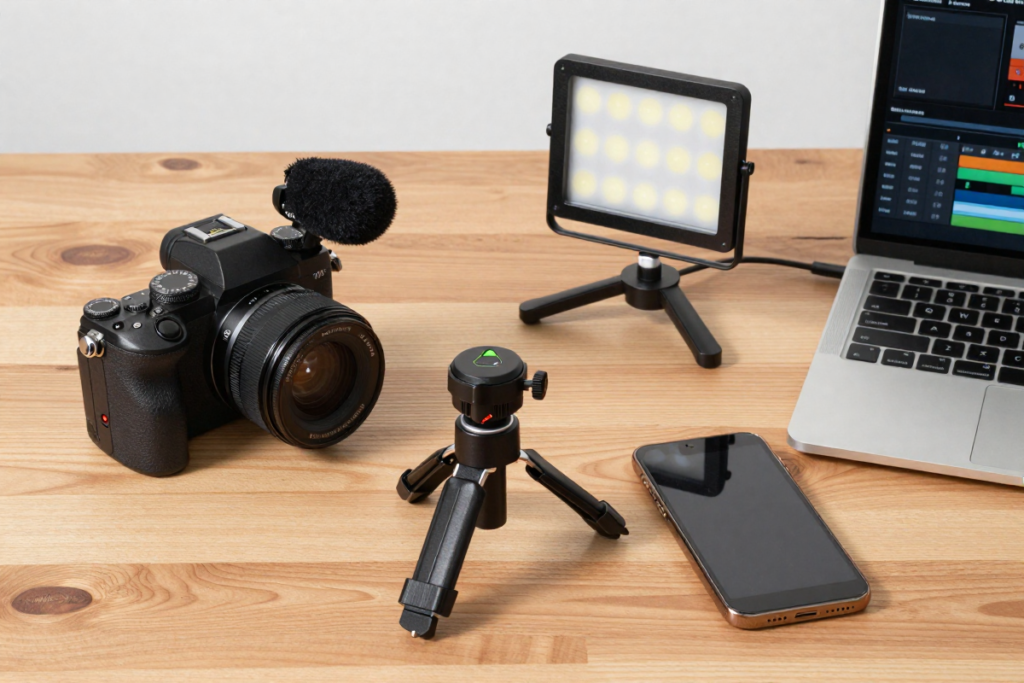
Sony ZV-E10: Entry-level mirrorless camera
NEEWER 2 Pack Lavalier Lapel Microphone: Budget lavalier mic kit
Neewer 10″ Ring Light Kit: Compact LED lighting panel or ring light
Amazon Basics 60-Inch Tripod: Affordable camera tripod or gimbal stabilizer
Pro tip: Audio quality matters more than image quality. Audiences forgive grainy footage. They will not forgive bad audio. Prioritize your microphone investment above everything else.
Your Action Plan: How to Apply These Lessons Starting This Weekend

Step 1: Audit What You Already Have
Walk through your home, neighborhood, and social circle. List your locations, available props, people who might act or help, and any gear you own. Your script starts here.
Step 2: Write a Resource-Based Script
Constrain your story to what’s available. One or two locations. A small cast. Minimal props. This isn’t limiting — it’s focusing.
Step 3: Keep Your Production Lean
Solo shooting or a crew of two to three people is faster, cheaper, and often produces better results than a bloated production. Fewer opinions, faster decisions.
Step 4: Obsess Over Audio
Beg, borrow, or buy a decent microphone before you spend money on anything else. Clean dialogue is non-negotiable.
Step 5: Edit and Publish — Don’t Sit On It
Momentum beats perfection. A finished film on YouTube reaches more people than an unfinished masterpiece on your hard drive.
How to Grow and Monetize as a No-Budget Filmmaker
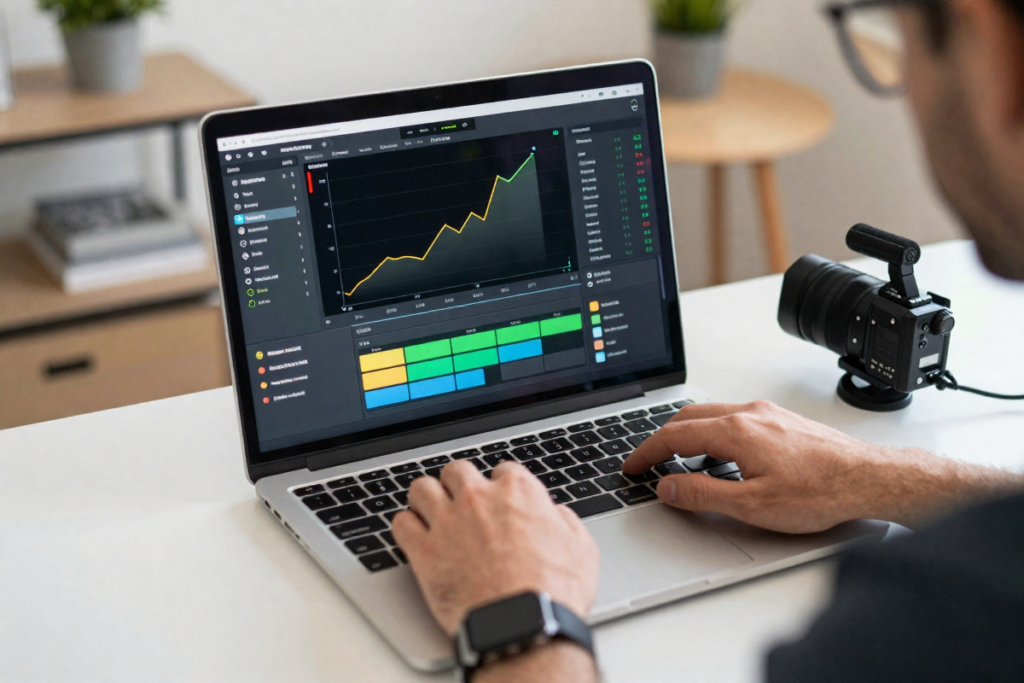
Getting the film made is step one. Here’s what comes next:
- Film Festivals: Research festivals that specifically welcome micro-budget and short films. FilmFreeway offers free submission tracking. Many strong festivals have low or waived entry fees for emerging filmmakers.
- Online Distribution: YouTube, Vimeo, and emerging platforms like Kinema allow you to build an audience before you have industry connections.
- Niche Audience Building: The filmmakers who build careers fastest are the ones who document their process. Behind-the-scenes content, tutorials, and filmmaker vlogs build loyal audiences that follow your work long-term.
- Affiliate Marketing: Recommend the gear and software you actually use. Authentic recommendations from working filmmakers convert exceptionally well.
- Brand Partnerships: Once you have an engaged audience, brands targeting creators and filmmakers will pay for sponsorships and integrations.
Mistakes That Keep Filmmakers Stuck
Avoid these common traps that cost aspiring filmmakers months or years of progress:
- ❌ Waiting for the perfect gear. The camera you have today has made successful films.
- ❌ Overcomplicating the story. Scope kills no-budget projects. Simplify ruthlessly.
- ❌ Ignoring audio. Bad sound is the fastest way to lose an audience.
- ❌ Never finishing. A completed imperfect film beats an abandoned perfect one every time.
- ❌ Comparing yourself to big-budget productions. You’re playing a different game — one with better odds of actually getting made.
Frequently Asked Questions
Can you really make a good movie with no money or experience?
Yes — and this article gives you five examples. Story, performance, and execution matter more than budget.
What’s the cheapest movie ever made that was successful?
Paranormal Activity was made for approximately $15,000 and grossed nearly $200 million worldwide. The Blair Witch Project cost around $60,000 and earned $250 million.
What equipment do you need to make a movie with no budget?
At minimum: a smartphone or entry-level camera, a basic external microphone, free editing software like DaVinci Resolve, and available natural light. That’s genuinely all you need to start.
How do you get a no-budget film into a film festival?
Start with festivals that specifically support emerging and micro-budget filmmakers. Use FilmFreeway to manage submissions. Focus on regional festivals first to build laurels and credibility.
Is it too late to start if I have no money or connections?
Robert Rodriguez was 23. Christopher Nolan was 28. Kevin Smith was 24. The timeline you’re on is the right one — as long as you start.
Conclusion: Your Constraints Are Your Launchpad
The myth that you need money, gear, or connections to make a successful film has been disproven — repeatedly, across decades, by filmmakers who went on to reshape the industry.
Robert Rodriguez funded his debut through medical testing. Kevin Smith maxed out his credit cards and shot in his own workplace. Christopher Nolan borrowed his friends on weekends for a year. Sean Baker pointed a smartphone at the streets of Los Angeles. Damien Chazelle made an 18-minute proof-of-concept and used it as a key to unlock Hollywood.
None of them waited until they were ready. None of them had everything figured out. They started with what they had, told stories only they could tell, and finished what they started.
That’s the whole formula.
Your move: Audit your resources this weekend. Write a one-location, two-character script by next week. Shoot something — anything — within the next 30 days.
The filmmakers who made it with almost nothing didn’t have more resources than you. They just started before you did.
🎬 Explore Our Budget Gear Guide [How to Make Your Film Look Professional on a Budget]
📖 Related Reading:
- Essential Gear for Shooting Your First Short Film: A Complete Beginner’s Equipment Guide
- Things No One Tells You About Indie Filmmaking
- How to Start Filmmaking with Just a Smartphone
Have a no-budget filmmaking story of your own? Share it in the comments — we’d love to feature reader case studies in a future post.
Disclaimer: This article contains affiliate links. If you purchase an item through the link I will earn a small commission at no extra cost to you.
Leave a Reply