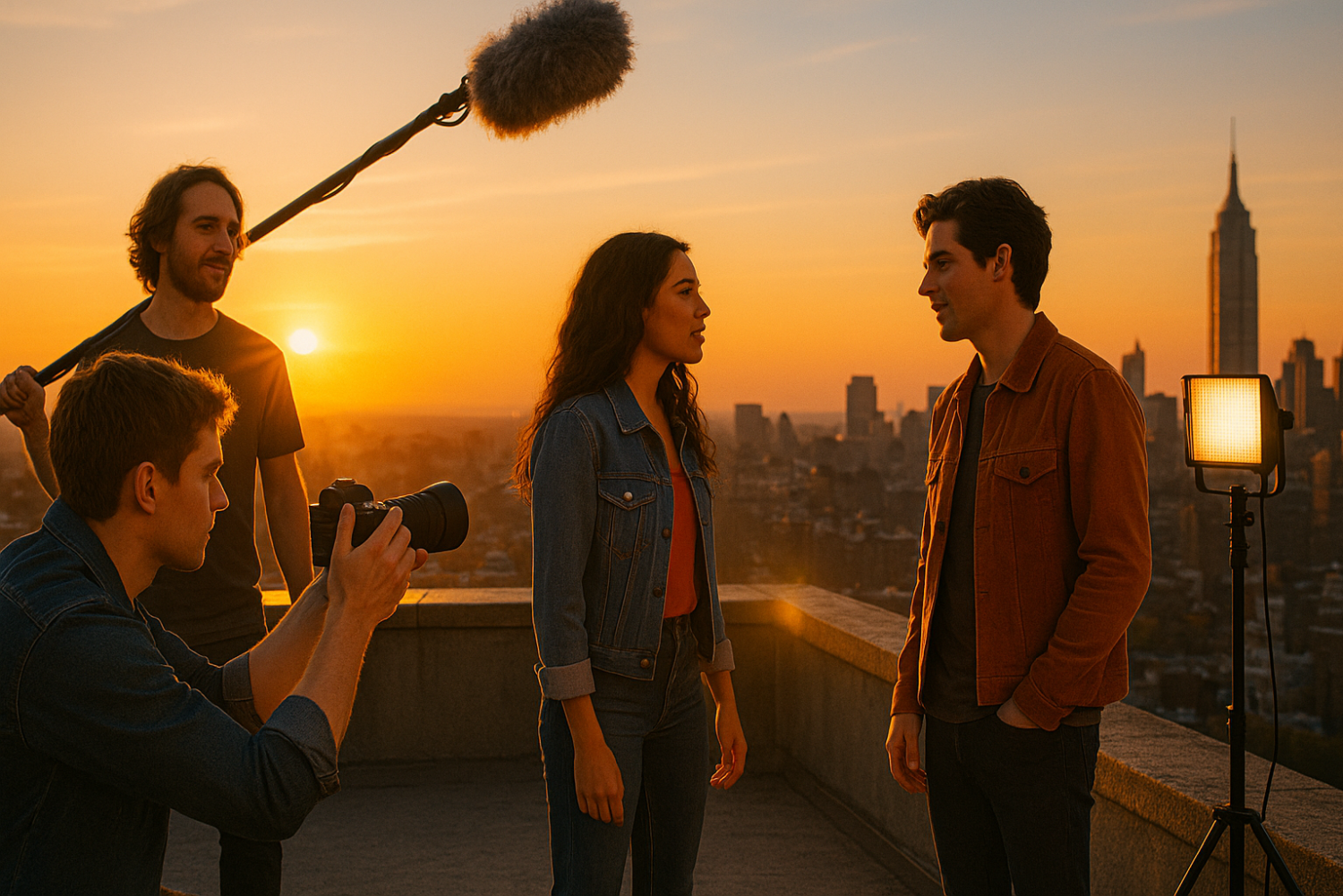
Making an indie film sounds romantic—you, a camera, and pure creative vision. But here’s the truth nobody mentions at film school: indie filmmaking is less Before Sunrise and more existential crisis with a side of maxed-out credit cards.
If you’re a first-time filmmaker, a creative thinking about taking the leap, or someone juggling a day job while chasing your cinematic dreams, this article is your reality check. We’re skipping the inspirational platitudes and diving into the unfiltered, sometimes brutal truths about independent filmmaking—plus the practical tools and strategies that actually help you succeed.
The Myth vs Reality of Indie Filmmaking
The “Anyone Can Make a Movie” Narrative
Thanks to smartphones and affordable gear, the barrier to entry has never been lower. You can technically shoot a feature film on an iPhone, edit it on free software, and upload it to YouTube—all without spending a dime.
But here’s what the democratization of technology doesn’t tell you: accessibility doesn’t equal quality. Just because you can make a movie doesn’t mean your first attempt will be watchable, let alone good. The gap between owning a camera and understanding cinematography, pacing, sound design, and storytelling is massive.
The Hidden Costs Nobody Mentions
When people talk about “low-budget filmmaking,” they focus on dollars. What they skip over is the invisible currency you’ll spend:
- Time: Months (often years) of your life dedicated to pre-production, shooting, and post-production
- Energy: Physical and mental exhaustion from 14-hour shoot days
- Opportunity cost: The jobs you didn’t take, the relationships you strained, the financial security you sacrificed
- Mental strain: The constant doubt, imposter syndrome, and anxiety about whether anyone will even watch your film
These hidden costs of independent filmmaking are what break most people—not the equipment budget.
You Will Spend More Time Producing Than Creating

Here’s the dirty secret: most of indie filmmaking isn’t filmmaking.
The Business Side of Filmmaking
You’ll spend countless hours:
- Creating shooting schedules that inevitably fall apart
- Securing location permits (or nervously guerrilla filming without them)
- Drafting crew contracts and actor release forms
- Managing personalities, egos, and conflicts
- Chasing down people who said they’d help but ghost you
The romantic vision of directing actors and crafting shots? That’s maybe 20% of the process. The other 80% is administrative nightmare fuel.
Why Organization Tools Are Essential
You cannot track all this in your head or on scattered napkins. Invest in project management solutions early:
- Production management software like StudioBinder or Celtx keeps scripts, schedules, and shot lists organized
- [Call sheet and scheduling tools] ensure your crew knows where to be and when
- [Budgeting templates] help you track where money is actually going versus where you thought it would go
These aren’t luxuries—they’re survival tools that separate completed films from abandoned hard drives.
Your First Film Will Probably Not Be Good (And That’s Normal)
Let’s be honest: your first indie film is going to have problems. Big ones.
Skill Gap Between Vision and Execution
You have this cinematic masterpiece in your head. What ends up on screen? Probably:
- Muddy, barely audible dialogue
- Inconsistent lighting that screams “amateur”
- Pacing issues that make 90 minutes feel like three hours
- Performances that range from “decent” to “did they even read the script?”
This isn’t failure—it’s the inevitable skill gap between your taste and your current abilities. Every filmmaker you admire went through this. The difference is they kept going.
Why Finishing Matters More Than Perfection
The harsh reality of independent filmmaking: a finished bad film teaches you more than an abandoned “perfect” one.
Completion is the skill that matters most. You learn editing by editing a whole film. You learn pacing by watching your own terrible pacing. You learn what works by seeing what didn’t.
Don’t let perfectionism kill your first project. Finish it, learn from it, then make something better.
Sound Is More Important Than Visuals (And More Expensive Than You Think)
This is the mistake that kills 90% of indie films.
Why Bad Audio Kills Films Instantly
Audiences will tolerate grainy footage, shaky cameras, even questionable acting. What they won’t tolerate is bad sound.
Why? Because bad visuals signal “low budget indie film.” Bad audio signals “unwatchable amateur disaster.” Our brains are wired to prioritize audio—if we can’t understand dialogue or if there’s distracting background noise, we tune out immediately.
Essential Audio Gear You Actually Need
Don’t cheap out here. Seriously.
[Shotgun microphones] – Essential for capturing directional dialogue. Budget option: Rode VideoMic; Pro option: Sennheiser MKH 416
[Lavalier microphones] – For interviews or dialogue scenes where you need consistent, close audio. Look for Rode SmartLav+
[Audio recorders] – Your camera’s built-in mic isn’t enough. Zoom H4n Pro or Tascam DR-40X are industry standards
Budget at least 15-20% of your total film budget for sound—recording AND post-production mixing. It’s that important.
“Low Budget” Doesn’t Mean Cheap—It Means Resourceful
Micro budget filmmaking isn’t about cutting corners. It’s about creative problem-solving.
Creative Problem Solving
The best low-budget filmmakers aren’t the ones with the most money—they’re the most resourceful:
- Locations: Instead of paying for a coffee shop, film at 6 AM before it opens (with permission)
- Props: Thrift stores, Facebook Marketplace, and your friends’ attics are goldmines
- Lighting hacks: Bounce natural sunlight with white poster boards instead of buying expensive reflectors
Every limitation forces creativity. Some of the most innovative indie films exist because of budget constraints, not despite them.
Smart Gear Investments
Where should your limited budget actually go?
[Budget cameras] – Blackmagic Pocket Cinema Camera 4K offers cinema-quality at prosumer prices; Panasonic GH5 is the reliable workhorse
[Lighting kits] – Aputure Amaran LED panels or Neewer 2-pack softbox kits give you controllable, professional-looking light on a budget
[Stabilizers/tripods] – DJI Ronin-RS4 for gimbal work; Manfrotto tripod for stable shots
Buy once, use forever. Cheap gear breaks or looks cheap on camera—neither saves you money long-term.
You Can’t Do Everything Alone (Even If You Try)
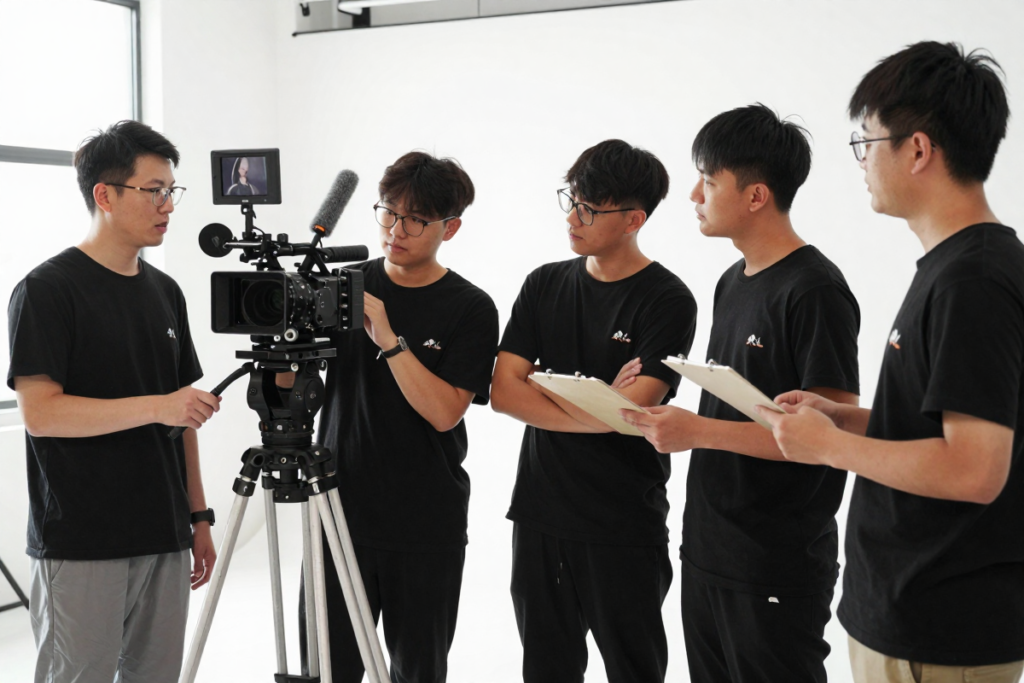
The lone-wolf filmmaker is a myth—and attempting it will destroy you.
The Importance of a Small but Reliable Crew
Even on micro-budget films, you need:
- Director of Photography (DP): Someone focused on camera and lighting while you direct
- Sound recordist: Audio is too important to half-ass
- Production assistant (PA): Someone to handle the thousand tiny things that derail shoots
- Editor (can be you, but better if it isn’t): Fresh eyes see what you can’t
Quality over quantity. Two reliable people beat five flaky ones every time.
Where to Find Collaborators
- Film communities: Local filmmaking groups on Facebook or Meetup
- Film schools: Students need portfolio work
- Online platforms: Mandy.com, ProductionHub, Stage 32
- Trade work: Offer to work on someone else’s project in exchange for them working on yours
Building relationships is how sustainable creative careers happen. Your crew becomes your network becomes your next project’s crew.
Actors Make or Break Your Film

You can have perfect cinematography and sound, but if your actors don’t work, your film doesn’t work.
Why Casting Is More Important Than Gear
A compelling performance shot on an iPhone beats a wooden performance shot on an Arri Alexa. Every time.
Audiences connect with characters through actors. If they don’t believe the performance, nothing else matters. This is why casting deserves as much attention as any other part of production.
Working with Non-Professional Actors
Pros:
- Often free or low-cost
- Enthusiastic and willing to take direction
- Can bring authenticity pros sometimes lack
Cons:
- Inconsistent performance across takes
- Limited understanding of camera technique
- May require significantly more rehearsal time
If you’re working with non-professionals, build in extra rehearsal time and don’t expect them to nail emotional scenes in one take. Patience and clear direction are everything.
Post-Production Takes Longer Than You Expect
Shooting feels like the hard part. Then you get to post-production.
Editing Is Where the Film Is Truly Made
There’s a saying: “Films are made three times—when you write them, when you shoot them, and when you edit them.”
Post-production is where you:
- Discover which scenes actually work (spoiler: not all of them)
- Reshape pacing and story flow
- Fix problems you didn’t catch on set
- Add sound design, music, and color that transform footage into a film
Plan for post-production to take 2-3 times longer than you think. Seriously.
Must-Have Editing Tools
[Editing software] – DaVinci Resolve (free version is incredibly powerful), DaVinci Resolve (Paid for tons of added features), or Final Cut Pro for Mac users
[Color grading tools] – DaVinci Resolve‘s color page is industry-leading; FilmConvert for quick, professional looks
[External storage solutions] – You WILL run out of space. G-Technology or LaCie external drives (minimum 4TB) are essential
Back up your footage. Then back it up again. Hard drives fail. Losing your footage is a nightmare that ends projects.
Film Festivals Are Not a Guaranteed Breakthrough
The festival circuit is romanticized as the path to indie film success. The reality is more complicated.
The Reality of Festival Submissions
Let’s talk numbers:
- Submission costs: $30-100 per festival
- Competition: Top festivals receive 10,000+ submissions for 100-200 slots
- Rejection: Most films get rejected from most festivals
- ROI: Even getting in doesn’t guarantee distribution or audience
Film festivals can be valuable for networking and validation, but they’re expensive and have astronomical rejection rates. Submit strategically, not desperately.
Smarter Distribution Strategies
Modern indie film distribution has alternatives:
- YouTube: Build an audience directly; monetize through ads
- Streaming platforms: Amazon Prime Video Direct, Vimeo On Demand let you self-distribute
- [Film aggregator services] – Companies like FilmHub or Distribber get your film onto major platforms
- Hybrid approach: Festival circuit for prestige, then self-distribution for revenue
The film industry is changing. Filmmakers who adapt to new distribution models often find more success than those chasing traditional paths.
Marketing Your Film Is Half the Battle
Great films go unseen every day. Not because they’re bad—because nobody marketed them.
Why Great Films Still Go Unseen
Making the film is only half the work. If you don’t build an audience, create buzz, and actively promote your film, it doesn’t matter how good it is.
The harsh truth: nobody cares about your film as much as you do. You have to make them care through relentless, strategic marketing.
Indie Film Marketing Essentials
[Email marketing tools] – Build a mailing list early (Mailchimp or ConvertKit) and update supporters throughout production
[Social media schedulers] – Buffer or Hootsuite let you maintain presence without living on social media
[Website builders] – Create a professional site for your film (Hostinger or SquareSpace)
Start marketing before you finish filming. Behind-the-scenes content, teaser trailers, and building community creates anticipation that translates to viewers when you release.
Burnout Is Real (And Common)
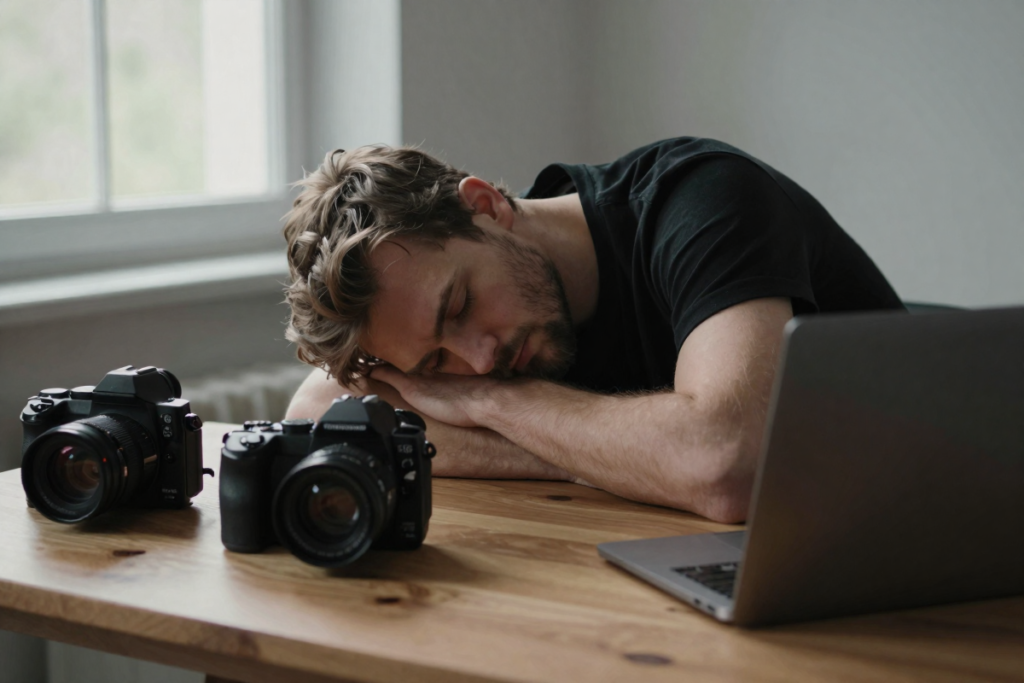
Nobody talks about the mental health challenges of being an independent filmmaker—but they’re significant.
The Emotional Toll of Indie Filmmaking
Indie filmmaking means:
- Long hours with no immediate payoff
- Constant financial stress
- Uncertainty about whether your work matters
- Isolation (especially during post-production)
- Imposter syndrome questioning if you’re “really” a filmmaker
This isn’t weakness—it’s the reality of independent film challenges that the industry doesn’t discuss.
How to Stay Consistent Without Quitting
Realistic pacing: You don’t have to finish in six months. Give yourself breathing room.
Set boundaries: Don’t let your film consume your entire life. Protect relationships, health, and mental wellness.
Find community: Other filmmakers understand. Join groups, attend meetups, build support systems.
Redefine success: Finishing is success. Learning is success. Not every film needs to win Sundance to matter.
The filmmaker’s journey is a marathon, not a sprint. Protect yourself for the long haul.
Success Looks Different in Indie Filmmaking
Redefining “Making It”
“Making it” doesn’t have to mean Hollywood deals and red carpets. For many indie filmmakers, success is:
- Making a living through freelance film work
- Building an online audience that supports your projects
- Creating content for brands while funding passion projects
- Teaching or mentoring other filmmakers
There’s no single path, and the traditional paths are increasingly unrealistic.
Building a Sustainable Creative Career
The most successful indie filmmakers diversify:
- Freelance work: Weddings, corporate videos, commercials fund passion projects
- Content creation: YouTube, Patreon, online courses create recurring income
- Brand deals: Companies pay filmmakers with audiences to create content
Sustainability beats overnight success. Build systems that let you keep creating long-term.
Lessons That Only Experience Teaches
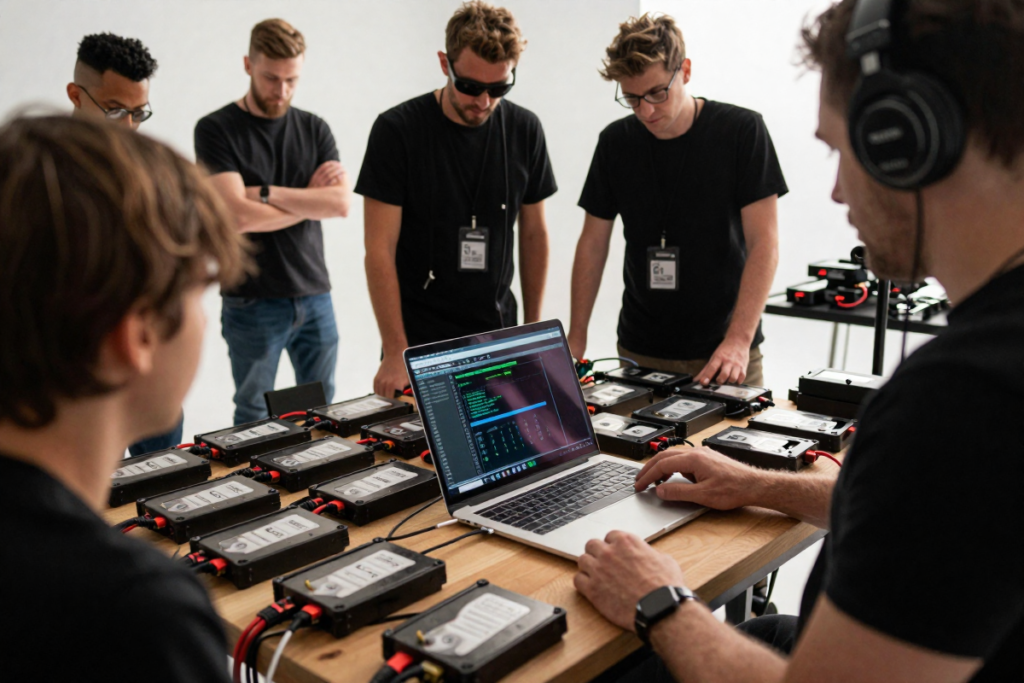
Some truths you have to learn the hard way, but here’s a head start:
- Always back up footage—to multiple drives. Hard drives fail. Yours will too.
- Feed your crew well—nothing kills morale like cheap pizza and no snacks
- Expect things to go wrong—they will. Every shoot has disasters. Adaptability matters more than planning.
- Get legal releases signed—before you shoot. Chasing people down later is hell.
- Prioritize sleep—exhausted filmmakers make terrible decisions
- Kill your darlings in the edit—that scene you love might be ruining the pacing
- Test equipment before shoot day—Murphy’s Law applies double to filmmaking
- Natural lighting is free—but you need to know how to use it
- Collaboration beats ego—the best ideas often come from crew, not just you
Recommended Indie Filmmaking Gear & Tools
Here’s a curated list of equipment and resources that actually matter for DIY filmmaking and low-budget movie making:
Cameras
[Blackmagic Pocket Cinema Camera 4K] – Best value for cinematic image quality ($1,295)
[Panasonic Lumix GH5] – Reliable hybrid for both video and stills ($1,397)
[Sony A7 III] – Exceptional low-light performance ($1,998)
Audio Gear
[Rode VideoMic Pro+] – Industry-standard shotgun mic ($299)
[Zoom H6 Recorder] – Professional portable audio recorder ($399)
[DJI Mic 3 Wireless Mic] – Wireless lavalier system ($649)
Lighting
[Aputure Amaran 200d] – Daylight LED light ($449)
[Neewer 2-Pack LED Light Panel] – Budget-friendly kit with stands ($169)
[Godox SL-60W] – Powerful, affordable LED light ($119)
Stabilization & Support
[DJI Ronin-SC] – Gimbal stabilizer for mirrorless cameras ($299)
[Manfrotto MT190XPRO3] – Professional tripod ($179)
Editing Software
[Adobe Premiere Pro] – Industry-standard editing ($20.99/month)
[DaVinci Resolve Studio] – Professional editing and color grading ($295 one-time – overall much better than Adobe Premiere Pro)
[Final Cut Pro] – Optimized for Mac users ($299 one-time)
Production Tools
[Final Draft 13] – Professional screenwriting software ($249)
[StudioBinder] – Production management platform (starts free)
Conclusion: Start Anyway
Indie filmmaking is harder, messier, and more emotionally draining than anyone admits. The costs are higher than you think—in money, time, energy, and relationships.
But here’s what’s also true: it’s possible.
Every film you love started as someone’s crazy idea they refused to abandon. Every filmmaker you admire struggled through their first terrible short film, fought with impossible budgets, and questioned whether any of it mattered.
The difference between filmmakers who make it and those who don’t isn’t talent—it’s persistence. It’s the willingness to finish bad films, learn from mistakes, and start again.
So if you’re thinking about making your first indie film: do it. Not because it’ll be easy, but because the only way to become a filmmaker is to make films.
What’s your biggest indie filmmaking fear or challenge? Drop it in the comments—let’s talk about the things no one else will.
And if you found this helpful, share it with another filmmaker who needs the reality check.
Disclaimer: This article contains affiliate links. If you purchase an item through the link I will earn a small commission at no extra cost to you.
Leave a Reply