The camera debate refuses to die. Walk into any filmmaking forum, Facebook group, or Reddit thread, and you’ll find the same heated arguments: DSLR loyalists defending their optical viewfinders, mirrorless enthusiasts preaching about autofocus, and beginners caught in the crossfire wondering if they should spend $500 or $5,000.
Here’s the truth most gear reviewers won’t tell you upfront: the camera type matters far less than what you do with it. The difference between DSLR and mirrorless won’t make or break your film—but understanding what actually impacts your workflow and final footage absolutely will.
This guide cuts through the specs, hype, and YouTube bias to focus on the features that genuinely matter for filmmaking. Whether you’re shooting your first short film, building a YouTube channel, or transitioning from photo to video, you’ll know exactly which camera type fits your needs by the end.
DSLR vs Mirrorless — Quick Answer for Busy Creators
Don’t have time for 3,000 words? Here’s the executive summary:
DSLR Advantages:
- Significantly better battery life (critical for long shoots)
- Optical viewfinder (no lag, works without power)
- Cheaper used market with mature lens ecosystems
- Often better ergonomics for larger hands
- No overheating issues on older models
Mirrorless Advantages:
- Superior autofocus (eye tracking, face detection)
- Modern video features (4K, 10-bit, high frame rates)
- In-body image stabilization (IBIS) for handheld work
- Lighter, more compact bodies
- Electronic viewfinder shows exact exposure preview
Who Should Choose What:
- Beginner on a budget? DSLR (especially used)
- Solo YouTuber/content creator? Mirrorless (autofocus is game-changing)
- Run-and-gun documentary shooter? Mirrorless (weight and IBIS matter)
- Traditional narrative filmmaker with crew? Either works (manual focus anyway)
- Buying in 2026+? Mirrorless (DSLR development has stopped)
Now let’s dig into why these differences matter—and when they don’t.
What’s the Real Difference Between DSLR and Mirrorless Cameras?
How DSLRs Work
DSLR stands for Digital Single-Lens Reflex. Inside the camera body sits a mirror that reflects light from the lens up into an optical viewfinder. When you press the shutter button, the mirror flips up, light hits the sensor, and your image is captured.
For video shooters, here’s what matters:
The mirror stays up during video recording, so the optical viewfinder goes dark. You’re forced to use the LCD screen. The camera’s phase-detection autofocus (built into the mirror mechanism) becomes unavailable, leaving you with slower contrast-detection autofocus through the sensor.
Practical impact: DSLRs were designed for photography first. Video was an afterthought, and it shows in features like autofocus performance and recording limits.
How Mirrorless Cameras Work
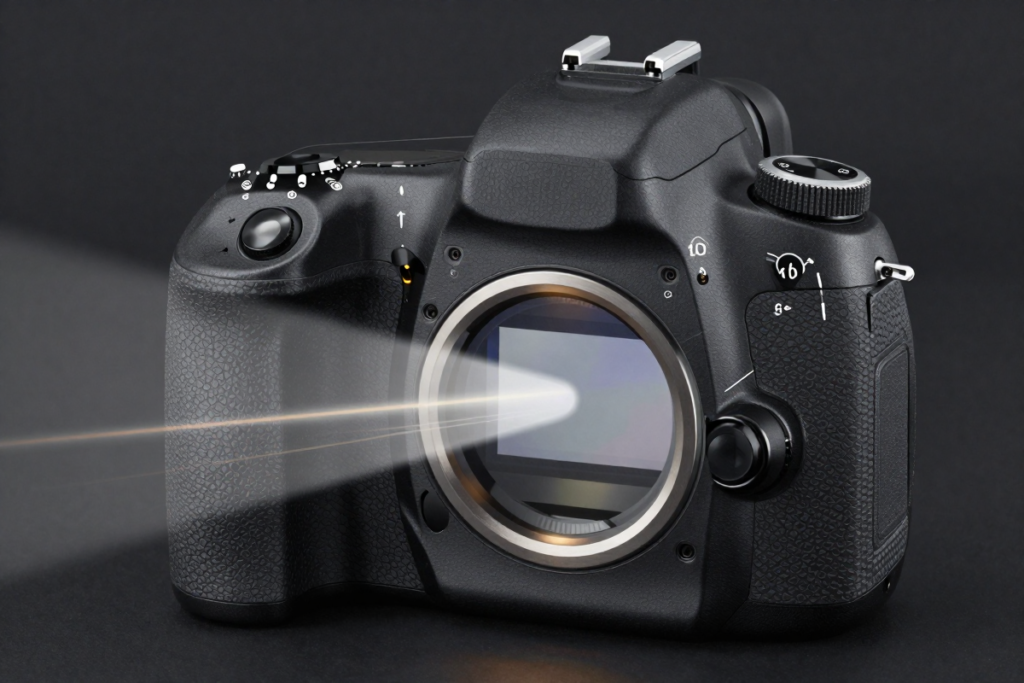
Mirrorless cameras eliminate the mirror box entirely. Light passes straight from the lens to the sensor, which feeds a live image to either an electronic viewfinder (EVF) or the rear LCD screen.
For video, this design means:
The sensor is always active and reading data. This enables continuous phase-detection autofocus, real-time exposure previews, and faster processing for advanced video features. Everything you see through the viewfinder is exactly what you’re recording.
Practical impact: Mirrorless cameras were designed in the modern era when video mattered. The architecture naturally supports filmmaking workflows.
Why This Difference Matters (or Doesn’t) for Video
Here’s the kicker: the final image quality from DSLR vs mirrorless is virtually identical when using the same sensor size and generation.
A full-frame DSLR and a full-frame mirrorless camera from the same year will produce nearly indistinguishable footage in terms of resolution, dynamic range, and color science. The sensor, not the camera type, determines image quality.
Where the differences do show up: autofocus performance, feature set, heat management, and user experience. That’s where we need to focus (pun intended).
Video Quality — Is One Actually Better?
Sensor Size and Image Quality
Let’s clear up the biggest misconception: both DSLRs and mirrorless cameras use the exact same sensor sizes and technologies.
- Full-frame (35mm equivalent)
- APS-C (crop sensor)
- Micro Four Thirds (MFT)
Canon’s full-frame DSLR and Canon’s full-frame mirrorless camera might literally use the same sensor. What changes is the body design and feature implementation, not the fundamental imaging technology.
What you need to know: Sensor size affects depth of field, low-light performance, and field of view—but it’s independent of whether your camera has a mirror. A full-frame DSLR and full-frame mirrorless camera will look nearly identical at the same aperture and ISO.
Dynamic Range and Low-Light Performance
Dynamic range (the difference between the darkest and brightest parts of your image) and low-light capability depend on:
- Sensor generation (newer = better)
- Sensor size (larger = better)
- Specific sensor architecture
- Image processing pipeline
The camera type (DSLR vs mirrorless) is irrelevant here. A Sony A7S III (mirrorless) crushes low-light scenarios because of its specialized sensor design. A Canon 5D Mark IV (DSLR) offers excellent dynamic range for the same reason.
Rule of thumb: Research the specific camera model’s sensor performance, not the category it belongs to.
Color Science and Profiles
“Color science” refers to how a camera manufacturer processes color information. Canon colors look different from Sony colors, which look different from Panasonic colors.
Both DSLR and mirrorless cameras from the same brand typically share the same color science. A Canon DSLR and Canon mirrorless camera will have nearly identical color rendering.
Log profiles (flat color profiles that preserve dynamic range for color grading) are available on both DSLRs and mirrorless cameras—it depends on the specific model and price point.
- Canon Log (C-Log)
- Sony S-Log
- Panasonic V-Log
- Nikon N-Log
Key Takeaway: Video quality comes down to the specific camera model—its sensor, processor, and price tier—not whether it has a mirror.
Autofocus — The Biggest Game Changer
If there’s one area where mirrorless cameras dominate, it’s autofocus for video.
DSLR Autofocus Limitations for Video
When a DSLR shoots video, the mirror flips up and phase-detection autofocus (the fast, accurate system used for photos) becomes unavailable. The camera falls back to contrast-detection autofocus, which works by hunting back and forth until the image looks sharp.
Real-world problems:
- Constant focus hunting (pumping in and out)
- Slow to acquire focus
- Poor subject tracking
- Unreliable in low contrast situations
Some newer DSLRs (like Canon’s Dual Pixel CMOS AF models) improved video autofocus significantly, but they’re the exception, not the rule.
Bottom line: Most filmmakers using DSLRs rely on manual focus, which requires skill, practice, and often additional crew.
Mirrorless Autofocus Advantages
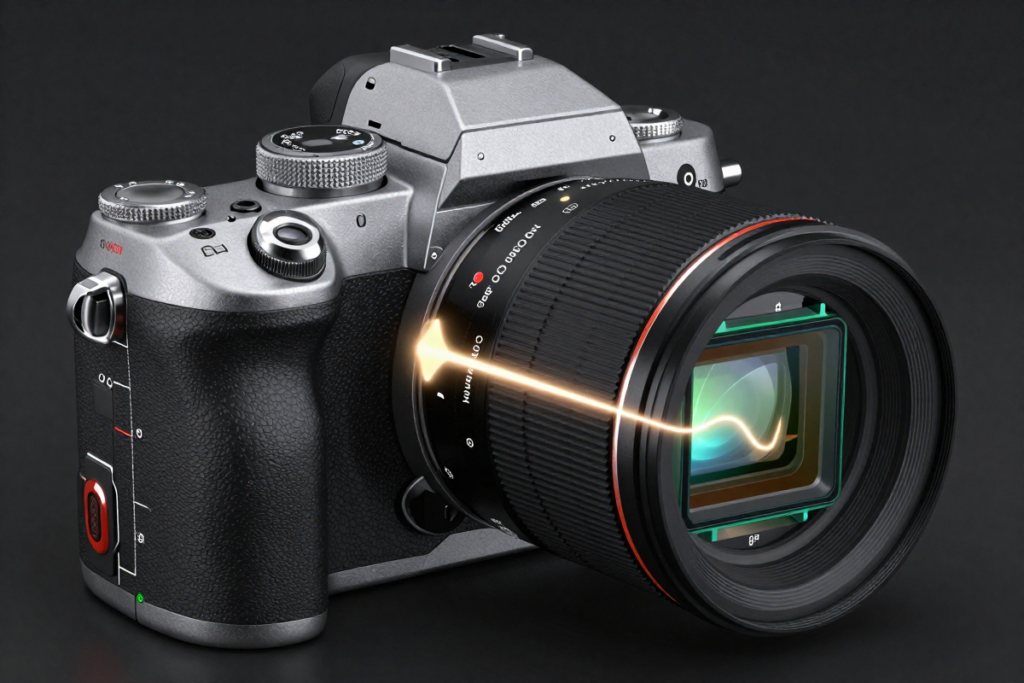
Mirrorless cameras use on-sensor phase-detection autofocus that works continuously during video recording. Modern systems include:
- Eye autofocus (locks onto subjects’ eyes automatically)
- Face detection (finds and tracks faces in the frame)
- Subject tracking (follows moving subjects across the frame)
- Animal/vehicle detection (on newer models)
Sony, Canon, and Panasonic have made autofocus so reliable that solo creators can shoot complex scenes without a focus puller.
Who Needs Good Autofocus?
Autofocus matters most for:
- Solo creators shooting themselves (YouTubers, vloggers)
- Run-and-gun documentary work
- Event coverage (weddings, conferences)
- Anyone working without a dedicated focus puller
Traditional narrative filmmakers with camera teams often prefer manual focus for creative control anyway. If you’re pulling your own focus with a follow focus system, DSLR vs mirrorless autofocus becomes irrelevant.
[Cameras with exceptional video autofocus – Sony A7 IV, Canon R6 Mark II, Panasonic S5 IIX]
Lens Ecosystem and Compatibility
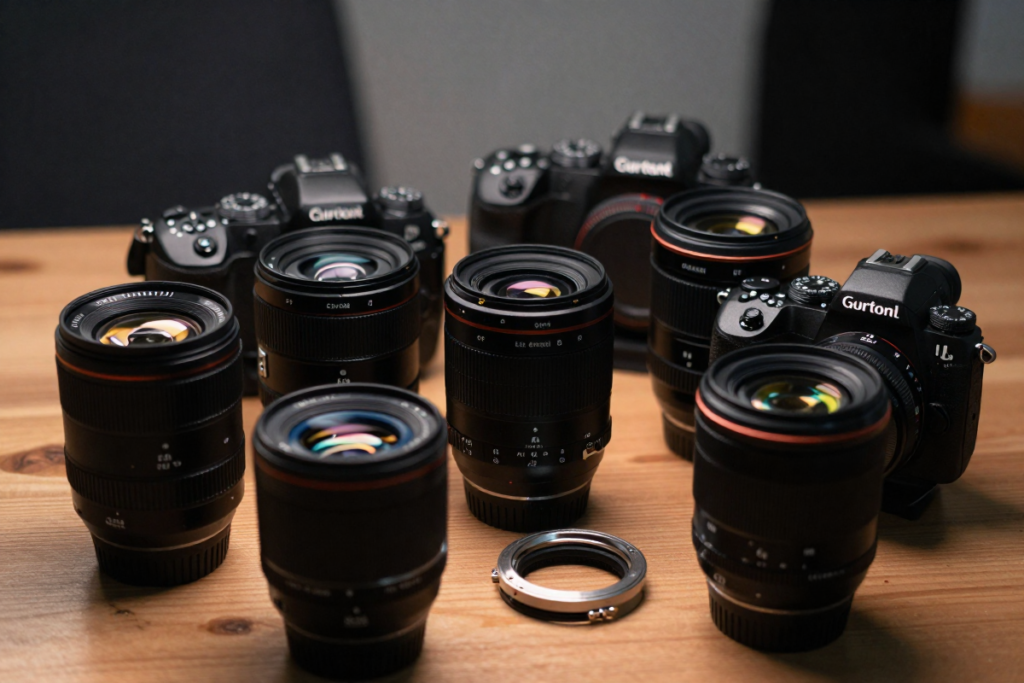
DSLR Lens Advantages
DSLRs have been around for decades, which means massive used lens markets and mature ecosystems:
- Canon EF (hundreds of options, 1987–present)
- Nikon F-mount (going back to 1959!)
- Affordable third-party options (Sigma, Tamron, Tokina)
You can find professional-grade used glass for a fraction of new mirrorless lens prices. A $300 used Canon EF 50mm f/1.8 STM performs beautifully for filmmaking.
Mirrorless Lens Growth
Mirrorless systems use new mounts with shorter flange distances (the space between lens mount and sensor):
- Canon RF
- Nikon Z
- Sony E-mount
- Panasonic/Leica L-mount
The good news? You can adapt DSLR lenses to mirrorless bodies with simple adapters, often keeping full autofocus and electronic control.
[Lens adapters – Canon EF to RF, Nikon F to Z]
The native mirrorless lens selection is rapidly expanding, with manufacturers prioritizing these systems for new development.
Budget Strategy
Best value approach:
- Buy a mirrorless camera body
- Use affordable adapted DSLR lenses
- Invest in native mirrorless glass over time as budget allows
This strategy gives you modern camera features while leveraging the decades-old used DSLR lens market.
[Budget lens kits – vintage manual lenses, affordable cinema lens sets]
Size, Weight, and Portability
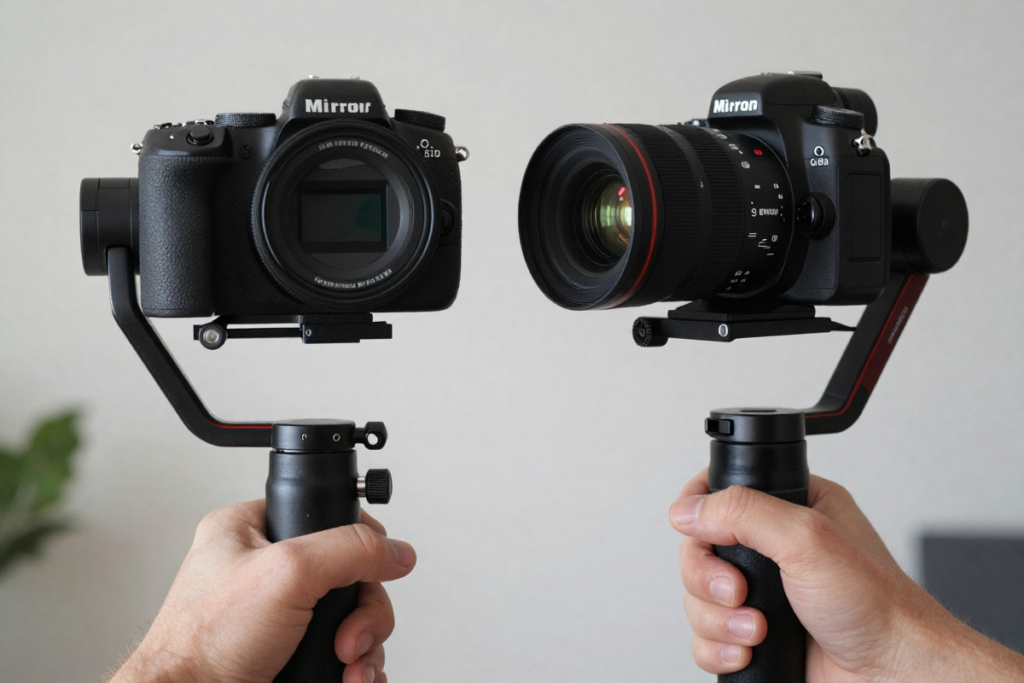
Removing the mirror box and related mechanics allows mirrorless cameras to be significantly lighter and more compact.
Real-world impact:
A Canon EOS R6 (mirrorless) weighs 680g compared to a Canon 5D Mark IV (DSLR) at 890g—over 200g difference. Add lenses, batteries, and accessories, and that weight compounds.
When this matters:
- Travel filmmaking (every gram counts)
- Gimbal work (lighter = easier balancing)
- All-day handheld shooting (your arms will thank you)
- Drone mounting (weight restrictions)
When DSLRs win:
- Larger hands may find DSLR ergonomics more comfortable
- Studio work where weight isn’t a factor
- Some prefer the “substantial” feel for handheld stability
[Camera cages and rigs to improve ergonomics: SmallRig Camera Rig]
Battery Life and Reliability
Here’s where DSLRs shine: significantly better battery life.
Why DSLRs last longer:
- Optical viewfinder uses no power
- Simpler electronics
- Less processing overhead
- Mirror mechanism is mechanical, not electronic
Typical battery performance:
- DSLR: 800-1200 shots, 2-4 hours of video recording
- Mirrorless: 300-500 shots, 1-2 hours of video recording
Mirrorless cameras drain batteries faster because the sensor, EVF, and LCD are constantly active.
Real shooting scenarios:
For a full day of shooting, DSLR users might need 2-3 batteries. Mirrorless shooters often carry 5-6 batteries. This adds cost and requires more vigilant battery management.
Solutions for mirrorless:
- Invest in spare batteries upfront
- Battery grips (doubles capacity)
- USB-C power delivery on newer models
- External power banks for long interviews
[Find The Right Battery For Your Camera: Spare batteries, battery grips, USB-C power banks]
Video Features That Actually Matter
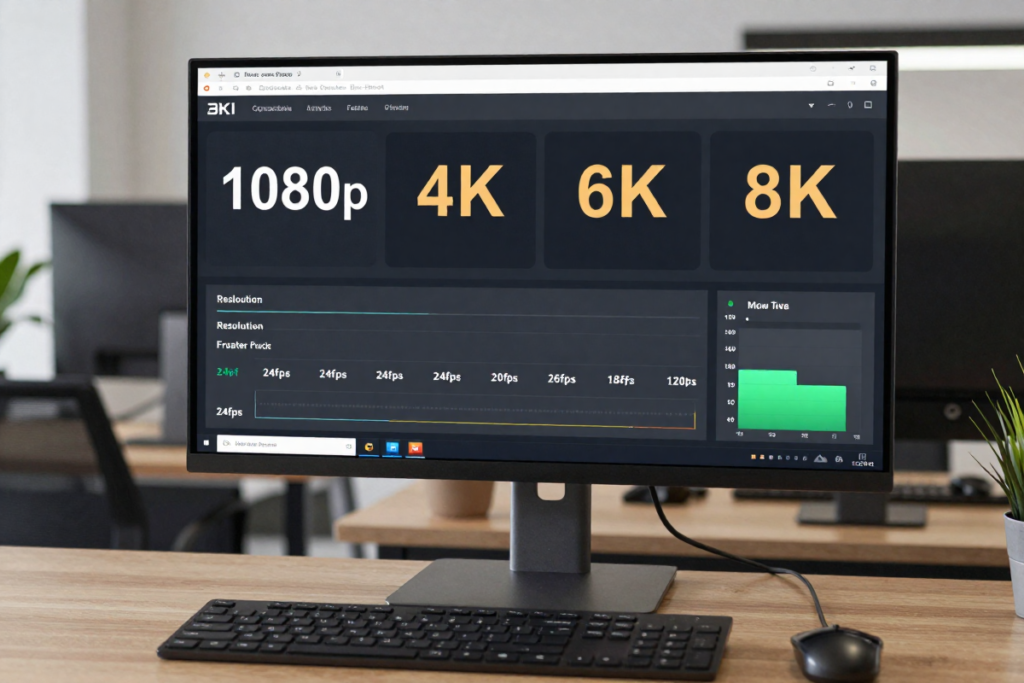
4K, Frame Rates, and Bitrate
Modern mirrorless cameras generally offer better video specs than older DSLRs:
Resolution options:
- 4K (3840×2160) — now standard on mirrorless
- 6K/8K — appearing on flagship mirrorless models
- 1080p — still viable for web content
Frame rates for slow motion:
- 24fps/30fps — narrative standard
- 60fps — smooth motion/2x slow-mo
- 120fps — 5x slow-mo (common on mirrorless)
- 240fps+ — extreme slow-mo (high-end only)
Bitrate and codecs:
Higher bitrates preserve more image information:
- 100 Mbps — entry-level 4K
- 200-400 Mbps — high-quality 4K
- 10-bit color — better grading flexibility (mirrorless advantage)
Most older DSLRs cap at 8-bit 4K with lower bitrates. Newer mirrorless cameras offer 10-bit internal recording, ProRes options, and RAW output.
In-Body Image Stabilization (IBIS)
IBIS is almost exclusively found in mirrorless cameras. It compensates for camera shake by shifting the sensor, typically offering 5-7 stops of stabilization.
When IBIS matters:
- Handheld shooting without a gimbal
- Documentary/run-and-gun work
- Using non-stabilized lenses
- Low-light situations (allows slower shutter speeds)
When it doesn’t:
- Tripod/slider work (stabilization off anyway)
- Gimbal shooting (gimbal handles stabilization)
- When using optically stabilized lenses
Note: IBIS can introduce micro-jitters. Many filmmakers disable it for locked-off shots.
Recording Limits and Overheating
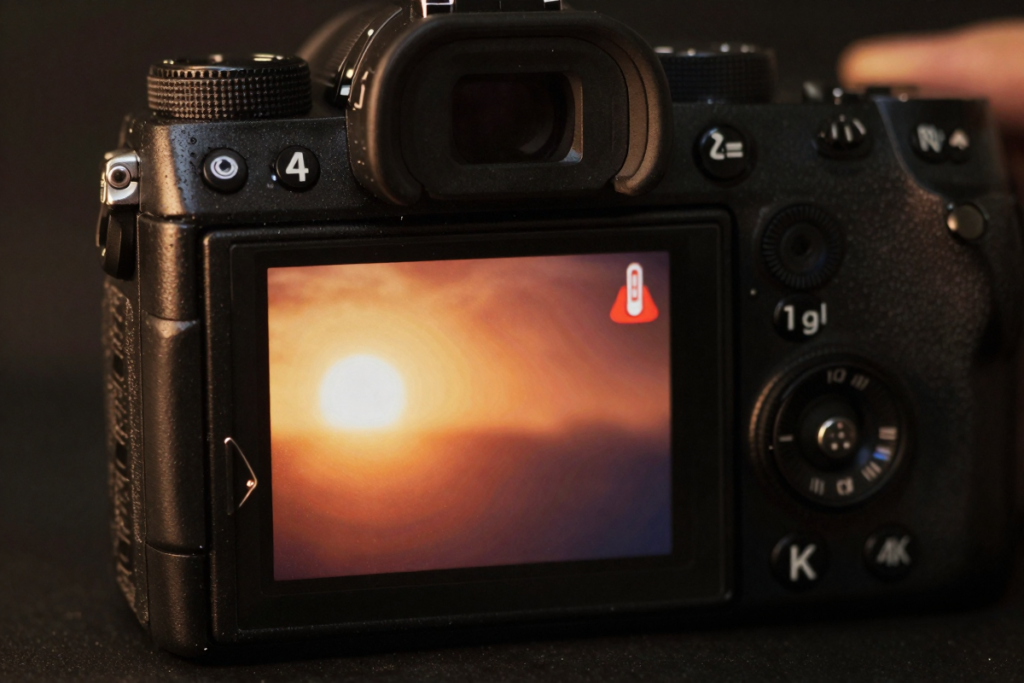
Older DSLRs often had artificial recording limits (29 minutes 59 seconds) due to EU tax classifications. Modern cameras increasingly offer unlimited recording.
Overheating is a mirrorless concern. Because the sensor is constantly active and processing power is higher, heat buildup can force the camera to shut down.
Worst offenders:
- Early Sony A7 series (overheating in 4K)
- Canon EOS R5 initial release (infamous overheating)
Better performers:
- Panasonic cameras (excellent heat management)
- Sony FX3/FX30 (cinema line design)
- Canon R5 C (active cooling)
DSLRs rarely overheat because they use less processing power and older codecs.
Ports and Connectivity
Essential for filmmaking:
- 3.5mm mic input (both DSLR and mirrorless)
- Headphone jack (sometimes omitted on entry models)
- HDMI output for external recorders (clean HDMI signal)
- USB-C for power delivery and control
[External microphones – shotgun mic, lavalier system]
[HDMI cable, external recorders like Zoom H1n Audio Recorder]
Price — Which Gives Better Value?
DSLR Deals (Especially Used)
The used DSLR market is a goldmine for budget filmmakers:
- Canon 5D Mark III — $500-700 used, excellent 1080p
- Canon 80D — $400-500 used, Dual Pixel AF
- Nikon D750 — $600-800 used, full-frame
These cameras still produce professional-quality footage. The only “cost” is missing modern features like 4K and advanced autofocus.
Mirrorless Pricing Trends
New mirrorless cameras are more expensive initially but dropping in price:
- Entry-level: $600-1000 (Sony A6400, Canon R50)
- Mid-range: $1500-2500 (Sony A7 IV, Canon R6 II)
- Professional: $3500+ (Sony A7S III, Canon R5 C)
Mirrorless used markets are growing as early adopters upgrade, creating opportunities for savvy buyers.
Total Cost of Ownership
Don’t forget:
- Lenses (often cost more than the body long-term)
- Batteries (mirrorless needs more)
- Memory cards (higher bitrates = faster/larger cards)
- Accessories (cages, adapters, filters)
Budget allocation strategy:
- 40% camera body
- 50% lenses
- 10% accessories
Best DSLR Cameras for Filmmaking (Budget Picks)
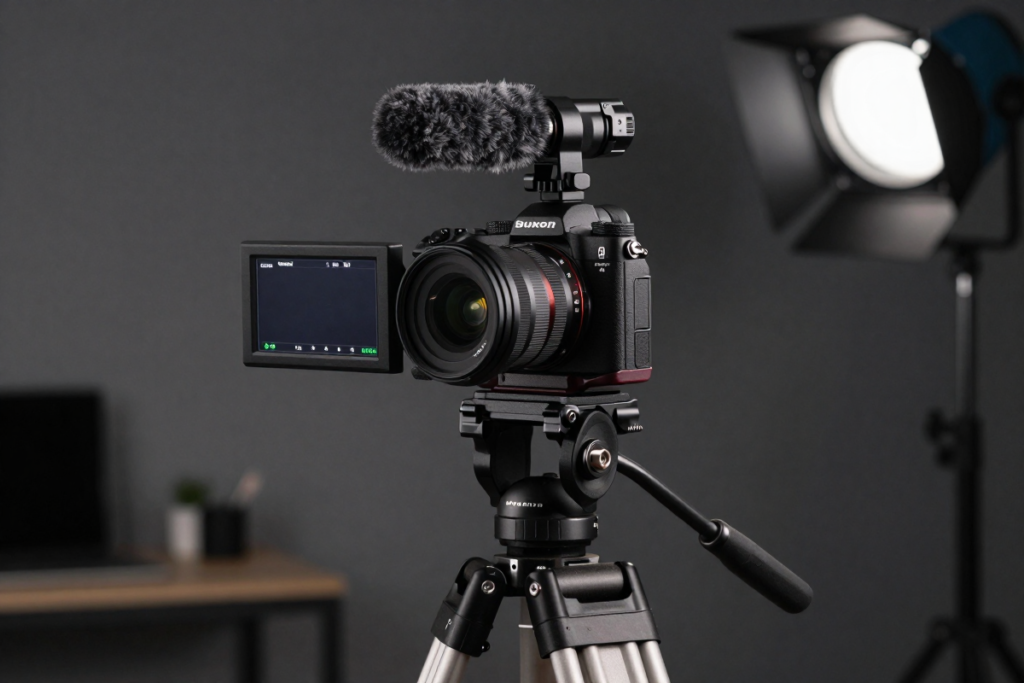
If you’re going the DSLR route in 2025, here are the models still worth buying:
Canon 80D (Used: $400-500)
Pros:
- Dual Pixel CMOS AF (best DSLR autofocus)
- 1080p at 60fps
- Articulating screen
- Huge lens ecosystem
Cons:
- No 4K
- 8-bit color only
- Dated sensor
Best for: Beginners learning on a budget
[AVAILABLE HERE: Canon 80D body and kit]
Canon 5D Mark IV (Used: $1200-1500)
Pros:
- Full-frame sensor
- 4K video (with 1.7x crop)
- Dual Pixel AF
- Canon Log
Cons:
- Heavy (890g)
- 4K crop factor
- Expensive for a DSLR
Best for: Traditional filmmakers who prefer optical viewfinders
[AVAILABLE HERE: Canon 5D Mark IV body]
Best Mirrorless Cameras for Filmmaking (Top Picks)
Budget: Panasonic Lumix S5 (New: $1500-1800)
Pros:
- Full-frame sensor
- 4K 60fps 10-bit
- V-Log included
- Dual native ISO
- No overheating
Cons:
- Autofocus lags behind Sony/Canon
- Smaller lens selection
Best for: Color graders and narrative filmmakers
[AVAILABLE HERE: Panasonic S5 body]
Mid-Range: Sony A7 IV (New: $2500)
Pros:
- Excellent autofocus
- 4K 60fps 10-bit
- 33MP stills (hybrid use)
- Great battery life (for mirrorless)
- Extensive lens ecosystem
Cons:
- Rolling shutter in 4K 60fps
- Menu system learning curve
Best for: Hybrid shooters (photo + video)
[AVAILABLE HERE: Sony A7 IV body]
Content Creator: Canon EOS R6 Mark II (New: $2400)
Pros:
- Best autofocus in class
- 6K oversampled 4K
- No recording limits
- Great ergonomics
Cons:
- No RAW video internally
- Lower resolution stills (24MP)
Best for: YouTubers and solo creators
[AVAILABLE HERE: Canon R6 Mark II body]
Professional: Sony FX3 (New: $3900)
Pros:
- Cinema line features
- S-Cinetone color
- Active cooling (no overheating)
- Compact cinema form factor
- XLR inputs via handle
Cons:
- No EVF (external required)
- Expensive
- Overkill for beginners
Best for: Professional content production
[AVAILABLE HERE: Sony FX3 body and accessories]
Who Should Choose DSLR in 2025?
You should still consider a DSLR if:
- Budget is tight — Used DSLRs offer incredible value
- You’re learning fundamentals — Forces good manual focus habits
- Battery life is critical — Multi-day shoots without charging
- You already own DSLR lenses — No adapter needed
- You prefer optical viewfinders — No lag, no battery drain
- 4K isn’t necessary — 1080p is still viable for many projects
Reality check: DSLR development has stopped. Major manufacturers have discontinued DSLR lines. You’re buying legacy technology—which isn’t necessarily bad if it meets your needs at the right price.
Who Should Choose Mirrorless in 2025?
Mirrorless makes more sense if:
- You’re a solo creator — Autofocus is game-changing
- You need modern features — 4K, 10-bit, high frame rates
- Portability matters — Traveling or run-and-gun work
- You want IBIS — Handheld shooting without gimbal
- Future-proofing — All new development focuses on mirrorless
- You shoot YouTube/social content — Features designed for creators
Bottom line: If you’re buying new in 2025, mirrorless is the logical choice. All manufacturer R&D investment flows here.
Common Mistakes When Choosing a Camera
Mistake 1: Overvaluing Specs
“I need 8K RAW!” No, you probably don’t. Most Netflix-approved content is shot in 4K. Focus on features you’ll actually use.
Mistake 2: Ignoring Audio Quality
Audio is 50% of your film. A $500 camera with great audio will outperform a $5000 camera with terrible audio. Budget for quality microphones.
[RECOMMENDED MICS: Rode VideoMic NTG, Sennheiser MKE 600]
Mistake 3: Spending Too Much on Body, Not Enough on Lenses
Lenses affect image quality more than camera bodies. A $1000 lens on a $500 camera looks better than a $500 lens on a $1000 camera.
Better strategy:
- $1000 used camera body
- $2000 in quality lenses
Than:
- $2500 new camera body
- $500 kit lens
Mistake 4: Not Considering Workflow
Ask yourself:
- Do I need autofocus or can I pull focus manually?
- Am I shooting alone or with a crew?
- How much post-production color grading will I do?
- What’s my typical shoot duration?
Match the camera to your workflow, not the other way around.
The Truth Most YouTubers Won’t Tell You
Here’s the uncomfortable reality: story, lighting, and audio matter infinitely more than DSLR vs mirrorless.
Some of the most impactful films ever made were shot on cameras that would be considered “trash” by today’s standards:
- Tangerine (2015) — Shot entirely on iPhone 5S
- 28 Days Later — Shot on Canon XL1 (MiniDV camcorder)
- Early YouTube millionaires — Canon T2i/T3i (10+ years old)
The camera doesn’t tell the story. You tell the story.
Spend your time mastering:
- Lighting (one speedlight beats any camera upgrade)
- Audio (clear dialogue is non-negotiable)
- Composition (free, learn it thoroughly)
- Editing (saves bad footage, elevates good footage)
- Story structure (why anyone watches in the first place)
Gear YouTubers won’t tell you this because they can’t affiliate link your storytelling skills. But it’s the truth.
Recommended Accessories for Better Filmmaking
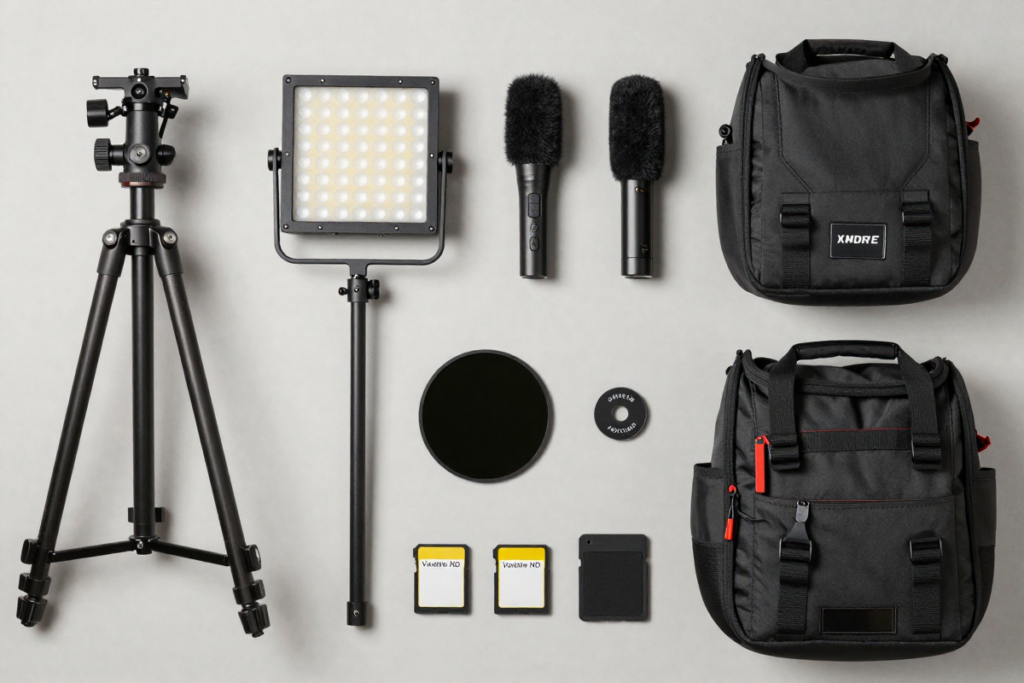
Regardless of DSLR or mirrorless, invest in:
Audio
- Shotgun microphone — Rode VideoMic Pro+, Deity D3 Pro
- Lavalier microphone — Rode Wireless GO II
- Audio recorder — Zoom H6 for interviews
Support
- Tripod — Manfrotto 055, Benro video tripods
- Gimbal — DJI RS3, Zhiyun Weebill 3
- Shoulder rig — SmallRig kit
Lighting
- LED panel — Aputure MC, Godox SL-60
- Softbox — Budget diffusion for harsh light
- Reflector — 5-in-1 reflector disc (under $25)
Filters
- Variable ND filter — Control exposure in bright conditions
- Polarizer — Reduce reflections, deepen skies
[AFFILIATE PLACEHOLDER: Filter links – Tiffen, K&F Concept]
Storage & Power
- Fast SD/CFexpress cards — Match your camera’s requirements
- Extra batteries — Always have 3+ for mirrorless
- Camera bag — Lowepro, K&F Concept
FAQ
Is mirrorless replacing DSLR?
Yes. All major manufacturers (Canon, Nikon, Sony) have stopped or significantly reduced DSLR development. New technology, lenses, and features focus exclusively on mirrorless systems.
Can you shoot professional films on a DSLR?
Absolutely. Image quality depends on the sensor and lens, not the mirror mechanism. Many professional films and TV shows were shot on DSLRs. However, modern mirrorless cameras offer more efficient workflows.
Is autofocus important for filmmaking?
Depends on your shooting style. Solo creators benefit enormously from reliable autofocus. Traditional narrative filmmakers with camera teams typically prefer manual focus for creative control.
Which is better for beginners?
Used DSLRs offer the best value for learning fundamentals. But if you can afford it, entry-level mirrorless provides better autofocus and features as you grow.
Are mirrorless cameras worth the price?
If you need modern features (4K, 10-bit, high frame rates, IBIS, excellent autofocus), yes. If you’re budget-constrained and can work within DSLR limitations, used DSLRs offer incredible value.
What is the main difference between a DSLR and a mirrorless camera for filmmaking?
Mirrorless cameras lack the mirror mechanism, enabling better video autofocus, electronic viewfinder previews, and more compact designs. Image quality is comparable when using similar sensors.
Which has better autofocus for video — DSLR or mirrorless?
Mirrorless cameras have significantly better video autofocus with features like eye tracking, face detection, and subject tracking. Most DSLRs struggle with continuous autofocus during video recording.
Does a mirrorless camera produce better video quality than a DSLR?
No inherent quality difference—it depends on the specific sensor and processing. However, mirrorless cameras typically offer better video specs (10-bit, higher frame rates, better codecs).
Do mirrorless cameras overheat when recording video for long periods?
Some models do, particularly early Sony and Canon mirrorless cameras. Newer models and cameras with active cooling (Panasonic, Sony FX line, Canon R5 C) handle heat much better.
Should a beginner filmmaker buy a DSLR or mirrorless camera?
Budget-conscious beginners: Used DSLR
Beginners with moderate budget: Entry-level mirrorless
Either works—prioritize learning lighting, audio, and storytelling over camera specs.
Final Verdict: DSLR vs Mirrorless for Filmmaking
Choose mirrorless if:
- You’re buying new in 2025
- Autofocus matters for your workflow
- You want modern features and future compatibility
- Portability is important
- You’re a solo creator or content producer
Choose DSLR if:
- Budget is your primary constraint
- You’re buying used equipment
- Battery life is critical
- You already have DSLR lenses
- You’re learning fundamentals and don’t need cutting-edge features
But here’s what actually matters:
The camera is a tool. The best camera is the one you:
- Can afford without going into debt
- Understand how to use effectively
- Actually pick up and shoot with regularly
A $500 camera in the hands of a skilled filmmaker will always beat a $5000 camera owned by someone who doesn’t understand lighting, composition, or story.
Stop researching and start shooting. The difference between DSLR and mirrorless matters far less than the difference between talking about filmmaking and actually making films.
Your first projects will be rough regardless of your camera choice—and that’s exactly how you improve.
Now pick a camera in your budget and go tell a story worth watching.
Cameras
Canon 5D Mark IV body
Canon 80D body and kit
Canon R6 Mark II
Panasonic S5 body
Panasonic S5 IIX
Sony A7 IV
Sony FX3 body and accessories
Budget lens kits –
vintage manual lenses
affordable cinema lens sets
Lens adapters
Canon EF to RF
Nikon F to Z
Variable ND filter
Polarizer (Lens Filter)
Audio Gear
Zoom H1n Audio Recorder
Zoom H6 Audio Recorder
Rode VideoMic NTG (Mic)
Sennheiser MKE 600(Mic)
Rode VideoMic Pro+ (Shotgun mic)
Deity D3 Pro (Shotgun Mic)
Rode Wireless GO II (Lavalier microphone)
STABLIZATION
SmallRig Camera Rig
Manfrotto 055 (Tripod)
Benro video tripods
DJI RS3 (Gimbal)
Zhiyun Weebill 3 (Gimbal)
LIGHTING
Aputure MC
Godox SL-60
Budget diffusion for harsh light
5-in-1 reflector disc
Storage/Power
Spare batteries, battery grips, USB-C power banks]
ACCESSORIES
Lowepro (Camera Bag)
K&F Concept (Camera Bag)
HDMI cable
Fast SD/CFexpress cards
Disclaimer: This article contains affiliate links. If you purchase an item from a link I will earn a commission. There is no extra cost to you.
Looking for more filmmaking guides? Check out our articles on [Movie Making: How to Use What You Have Such as Natural Light, Free Locations & Non-Actors], [Beginner Filmmaking Mistakes That Ruin Your First Film (And How to Avoid Them)].
Leave a Reply