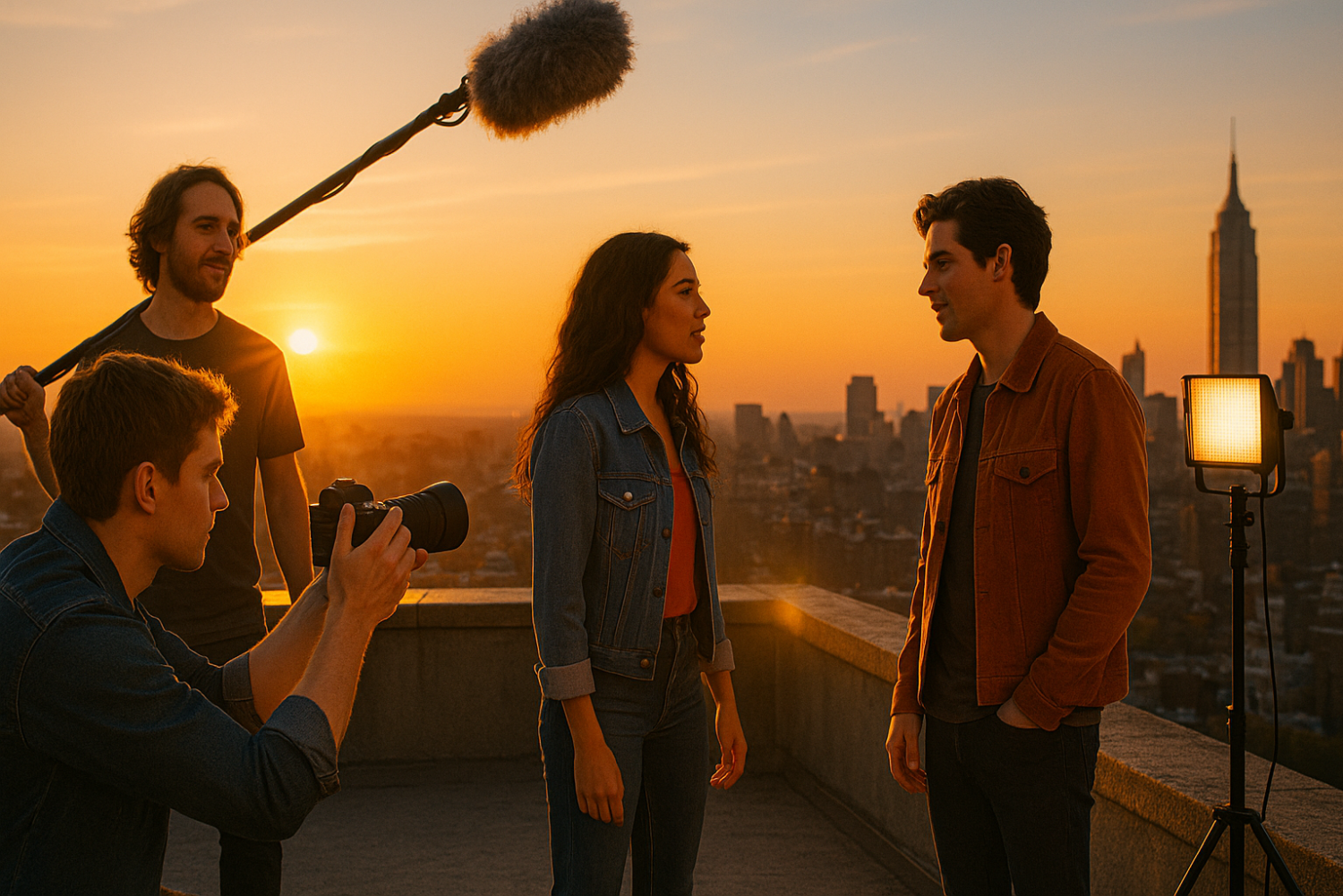
You’ve got the idea. You’ve got the passion. Maybe you’ve even got a camera in your hands and a story burning in your chest. Making your first film feels electric — until it doesn’t.
The harsh reality? Most first films fail. Not because the filmmakers lacked talent or dedication, but because they walked into common traps that no one warned them about. Bad audio that makes dialogue unwatchable. Shaky footage that screams “amateur.” A story that starts strong and collapses under its own weight. These aren’t rare problems — they’re practically a rite of passage in beginner filmmaking.
But here’s what the best filmmakers know that most beginners don’t: these mistakes are completely avoidable. With a little planning, the right gear, and an honest look at where first-time directors go wrong, you can skip years of painful trial and error.
In this guide, we’re breaking down the biggest beginner filmmaking mistakes that ruin first films — covering pre-production, on-set execution, audio, editing, gear selection, and mindset. Whether you’re making a short film on a shoestring budget or planning something more ambitious, these filmmaking tips for beginners will save your project before it even starts.
Why Most First Films Fail
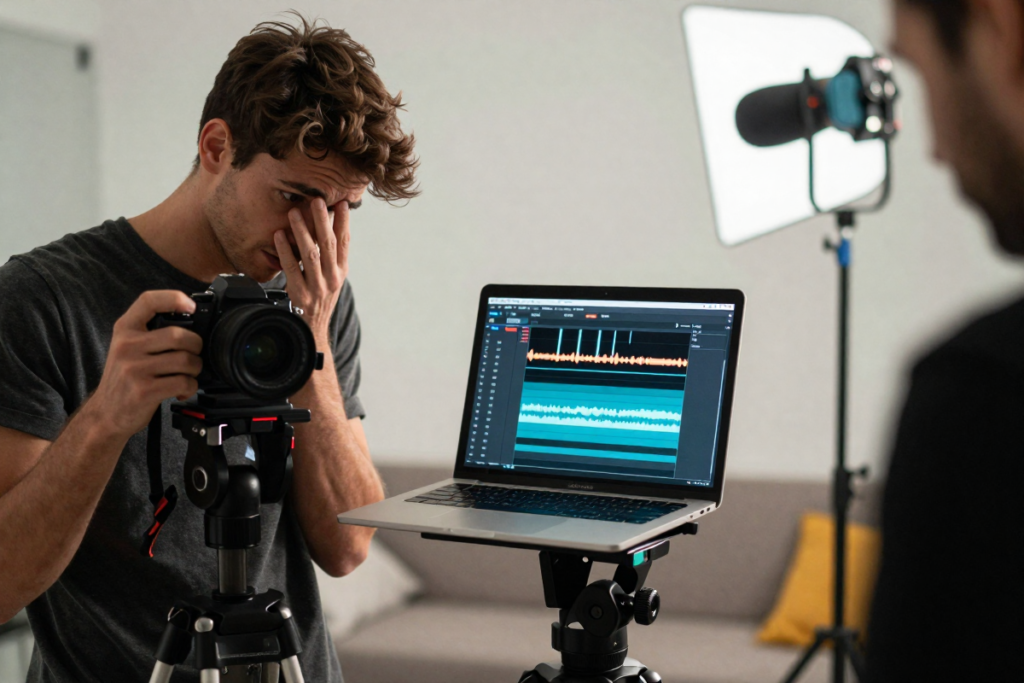
There’s a dangerous gap between having a great idea and executing it well on screen. Most beginner filmmakers overestimate how much their enthusiasm will carry them — and underestimate how much planning, discipline, and technical knowledge the craft actually requires.
The two most common mindset traps are:
- Overconfidence: “I’ll figure it out on set.” You won’t. Not the first time.
- Perfectionism paralysis: Waiting until everything is perfect before hitting record. Perfection is a myth — especially on a first film.
The good news? Mistakes are completely normal, and every professional filmmaker has a cringe-worthy first project buried somewhere. The goal isn’t to make a perfect film. The goal is to make a finished film — and avoid the specific mistakes that make it unwatchable.
Pre-Production Mistakes: The Biggest Film Killers
If your film is going to fail, it usually fails here — before the camera even rolls. Pre-production mistakes that ruin indie films are the most common and the most preventable.
1. Skipping Proper Script Development
A weak story is a weak film — no matter how cinematic your visuals look. Many beginner filmmakers rush past the script because they’re eager to start shooting, but overwritten dialogue, unclear character motivations, and narrative structure flaws will haunt every frame.
The fix: Master a simple framework before you write a single scene. For short films, a tight three-act structure works beautifully: establish your character and their world, introduce a conflict or turning point, and resolve it with emotional payoff. Your first short film should ideally run between 5 and 15 minutes — short enough to execute well, long enough to tell a complete story.
“Show, don’t tell” isn’t just a writing cliché — it’s the core philosophy of visual storytelling. If your characters are explaining what they feel, your camera isn’t doing its job.
2. Not Storyboarding or Creating a Shot List
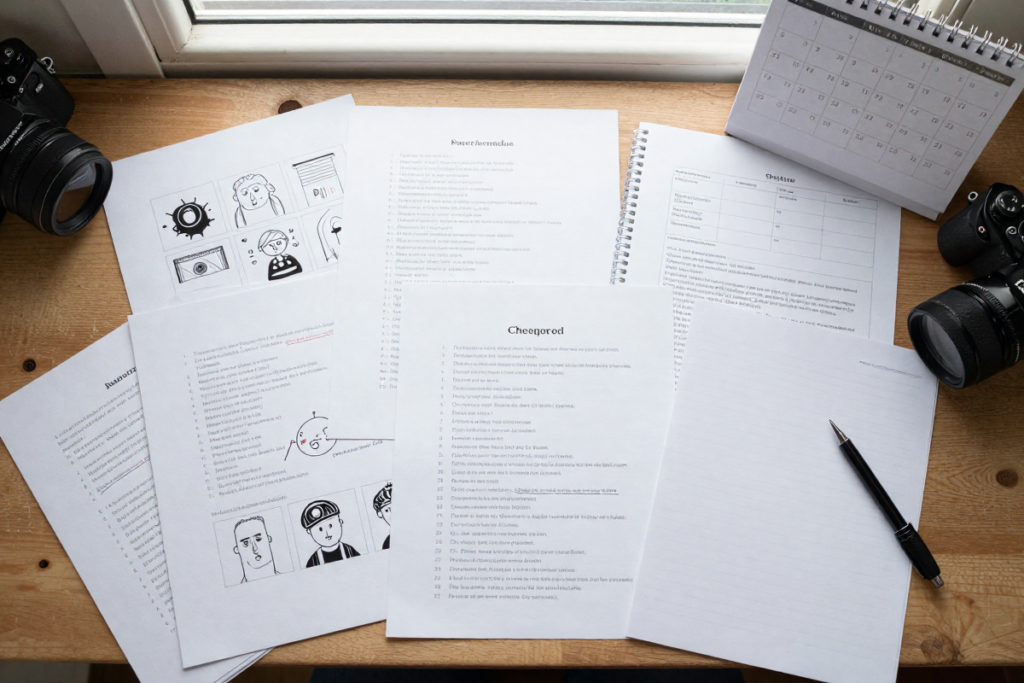
Going to set without a storyboard or shot list is like going on a road trip without a map. You’ll wander, you’ll miss key shots, and you’ll waste everyone’s time.
The fix: You don’t need to be an artist. Simple stick-figure sketches paired with camera notes are enough. There are also excellent storyboarding apps that make this fast and professional.
📌 [Get started here — Storyboarding Generator]
3. Poor Location Planning
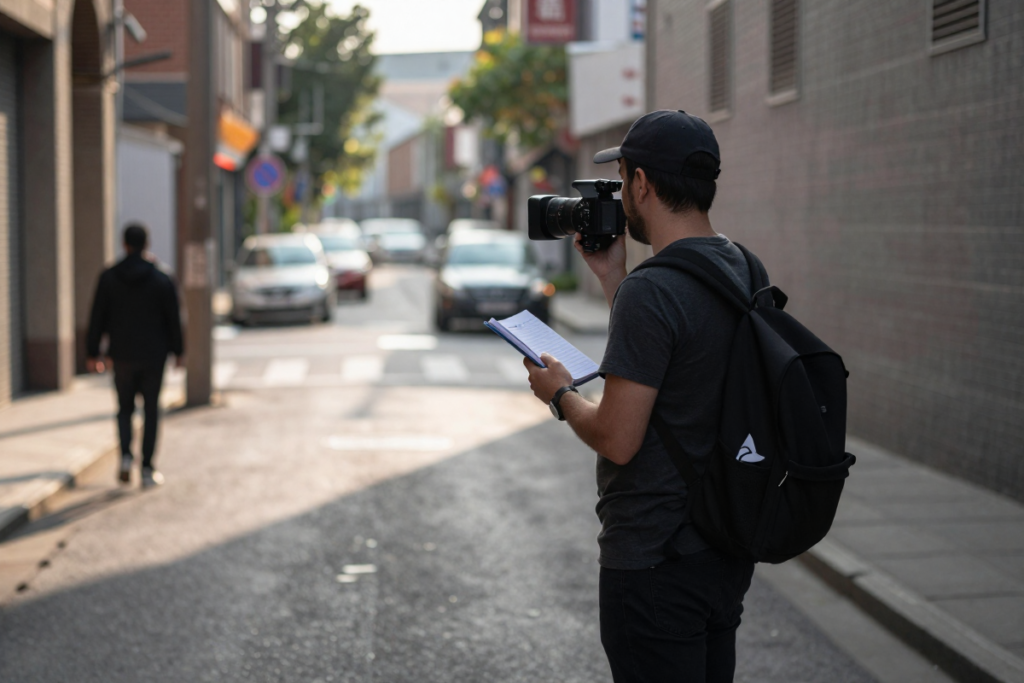
That “perfect” outdoor location might have a highway running behind it. That warehouse might echo like a cathedral. Location scouting isn’t just about aesthetics — it’s about noise control, natural light direction, legal permissions, and logistics.
The fix: Visit every location at the same time of day you plan to shoot. Check for background noise, assess how light changes throughout the day, and confirm you have permission to film there. Create a simple location scouting checklist to standardize the process.
4. Ignoring Budget Constraints
Overspending in pre-production or early production days is one of the fastest ways to end up with an unfinished film. Low-budget filmmaking mistakes beginners should avoid almost always include blowing the budget on equipment or a single scene — leaving nothing for post-production.
The fix: Use the 50/30/20 rule as a starting point — 50% of your budget for production essentials, 30% for post-production (editing, music, color), and 20% as a contingency buffer. Always hold something back.
Gear Mistakes Beginners Make
This is where a lot of beginner filmmakers spend too much time and money — and still end up with inferior results.
5. Overspending on the Wrong Camera
Here’s the myth that costs beginners thousands of dollars: an expensive camera equals cinematic results. It doesn’t. Production value comes from lighting, composition, and story — not megapixels.
Beginner-friendly camera options to consider:
📌 [Grab your new camera here — Sony ZV-E10]
📌 [Get it here — Canon EOS R50]
Both cameras produce stunning footage in the right hands. Learn to use your camera well before you upgrade.
6. Ignoring Audio Quality — The Biggest Technical Mistake
If there’s one technical mistake that makes beginner films unwatchable, it’s bad audio. Viewers will forgive imperfect visuals. They will not forgive dialogue they can’t hear or understand.
Bad audio — echo, wind noise, muffled speech — destroys immersion instantly. This is why experienced filmmakers say audio is 50% of your film.
The fix: Never rely on your camera’s built-in microphone for dialogue. Invest in a basic external microphone as your very first gear upgrade.
📌 [Great Mic for great sound! — Rode VideoMic GO II]
This single purchase will improve your film more than any camera upgrade.
7. Poor Lighting Setup
Lighting mistakes in beginner films are almost universal. Beginners either ignore lighting entirely (relying on whatever ambient light exists) or use it incorrectly (harsh overhead light, uneven exposure, wrong color temperature).
Natural light is a powerful tool — but only when you understand how to use it. Shooting with the sun directly overhead creates unflattering shadows. Shooting into a window without exposure control blows out your background.
The fix: Learn the three-point lighting setup — key light, fill light, and backlight — as your foundational technique. For affordable artificial lighting:
📌 [Get Your Lighting Here — Neewer 660 LED Light Kit]
8. Not Using a Tripod or Stabilization
Shaky handheld footage is the visual signature of an amateur film. While handheld shooting has its place — creating urgency, chaos, or intimacy — unmotivated camera movement just looks like an accident.
The fix: Start every shot with your camera on a tripod or stabilizer. Add movement only when it serves the story.
📌 BUY HERE: [Manfrotto Compact Action Tripod]
On-Set Filming Mistakes That Ruin Footage
9. Bad Composition and Framing
Center-framing every shot and ignoring depth is one of the most common beginner cinematography mistakes to avoid. It makes footage look flat and visually uninteresting.
The fix: Learn and apply these two foundational rules immediately:
- Rule of Thirds: Place your subject at the intersection of imaginary gridlines, not dead center.
- Leading Lines: Use natural lines in your environment — roads, walls, fences — to draw the viewer’s eye toward your subject.
These simple adjustments alone will dramatically increase your production value on a shoestring budget.
10. Incorrect Camera Settings
Frame rate confusion trips up almost every first-time filmmaker. Shooting at 60fps when you want a cinematic look gives you that hyper-real “soap opera effect.” Shooting at 24fps is the standard for a filmic aesthetic.
Basic settings to understand before you shoot:
- Frame rate: 24fps for cinematic look; 60fps for slow motion
- Shutter speed: Generally double your frame rate (24fps = 1/50 shutter)
- ISO: Keep it as low as possible to minimize grain
- White balance correction: Set manually to avoid color shifts between shots
11. Not Getting Enough Coverage
Missing angles on set creates impossible editing problems in post-production. You can’t cut between shots that don’t exist.
The fix: For every scene, shoot at minimum three angles:
- Wide shot — establishes the scene and spatial relationship
- Medium shot — the workhorse of storytelling
- Close-up — emotion, reaction, detail
Always shoot backup takes. You’ll thank yourself in the edit.
12. Ignoring Continuity
Continuity errors in student films are so common they’ve become a joke — but they genuinely break viewer immersion. A character’s coffee cup that jumps from full to empty to full between cuts. An actor’s jacket that switches shoulders. A prop that moves between takes.
The fix: Assign someone the role of continuity supervisor, even on a tiny crew. Take reference photos of every scene setup before you move on.
Sound Mistakes That Make Films Unwatchable
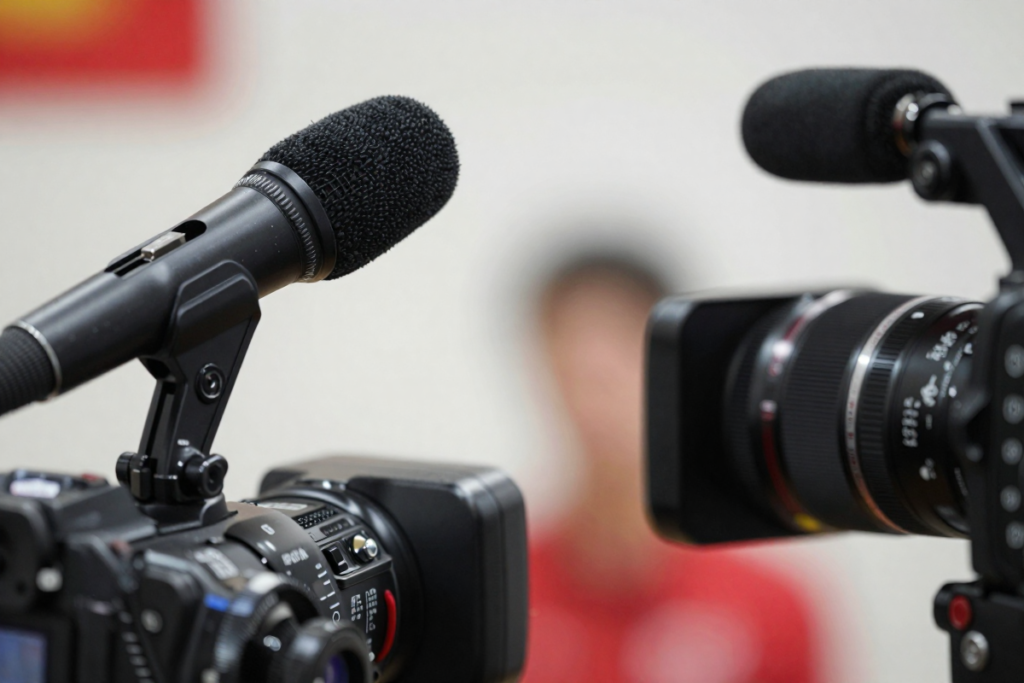
13. Recording Audio Too Far Away
The further your microphone is from your subject, the more room sound and echo you capture. Dialogue recorded too far away sounds hollow, distant, and unprofessional.
The fix: Get the microphone as close to your subject as possible without entering frame. A boom pole operator makes this significantly easier — even on a minimal crew.
14. Ignoring Background Noise
Wind, traffic hum, air conditioning, refrigerators — these sounds are invisible to us in daily life, but a microphone captures everything. Background noise is one of the audio mistakes that make beginner films unwatchable, and it’s nearly impossible to fix in post-production.
The fix: Before every take, call “quiet on set,” wait five seconds, and listen critically to your environment. Address noise sources before you roll.
15. Not Monitoring Audio While Filming
Recording audio without monitoring it live is flying blind. You could spend an entire shooting day capturing unusable dialogue and have no idea until you’re in the edit.
The fix: Plug headphones directly into your camera or audio recorder and monitor every take in real time. This simple habit catches problems before they become disasters.
Editing Mistakes Beginners Make
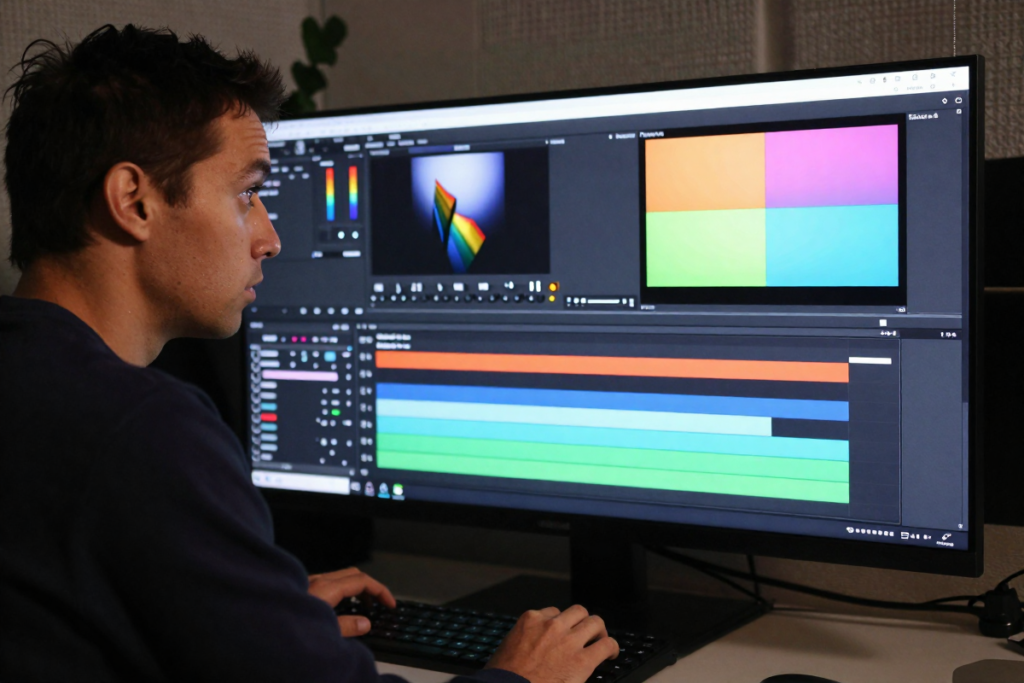
16. Overusing Effects and Transitions
Flashy transitions, wipes, lens flares, and speed ramps — editing mistakes that ruin short films often come down to over-embellishment. These effects signal inexperience immediately.
The fix: The cut is the most powerful transition in cinema. Use it 90% of the time. Reserve other transitions for specific, motivated moments.
17. Poor Pacing and Story Flow
Dragging scenes that overstay their welcome, or rushed cuts that don’t give moments room to breathe — both destroy audience engagement and retention. Pacing and rhythm in editing is a skill that takes time, but there are clear principles to follow.
The fix: Cut on action when possible. Enter scenes late and leave early. If a scene isn’t advancing story or revealing character, it probably doesn’t belong in the film.
18. Ignoring Color Correction and Color Grading
Flat, gray, inconsistent visuals are the hallmark of an unfinished film. Color grading mistakes beginner filmmakers make often come from skipping this step entirely or not understanding the difference between color correction (fixing technical issues) and color grading (applying a creative look).
Recommended tools:
📌 [DaVinci Resolve (paid version for advanced editing tools)]
📌 [DaVinci Resolve](free version available — industry standard for color grading)]
19. Bad Audio Mixing
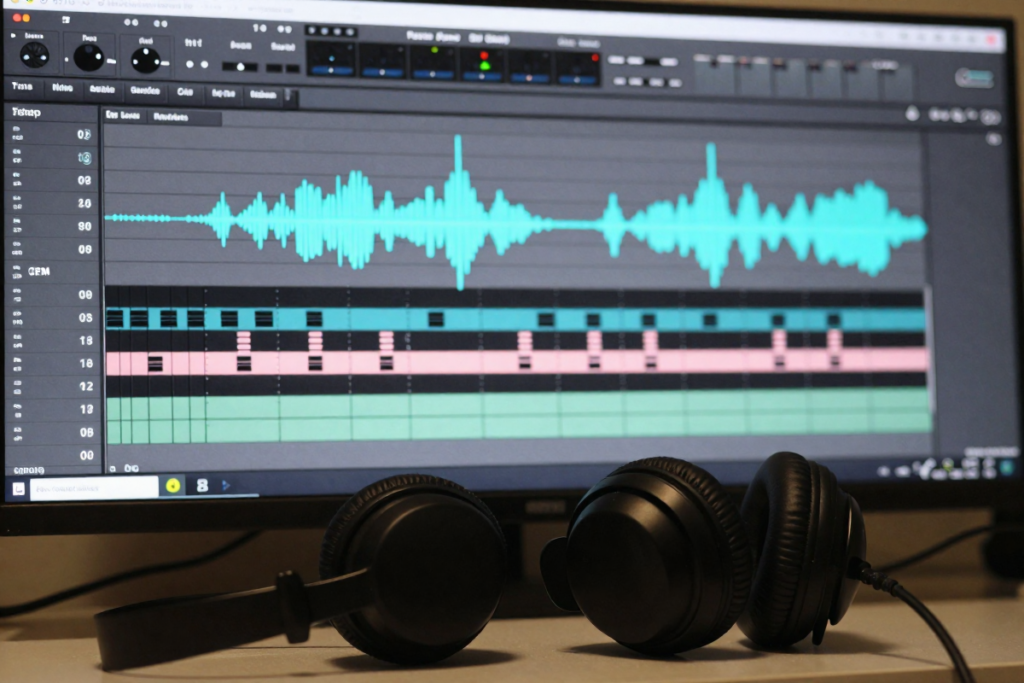
Dialogue buried under music, sound effects that overwhelm conversation, inconsistent volume between scenes — these are the audio post-production problems that make even well-shot films feel amateur.
The fix: Dialogue should always be the priority in your mix. Music and sound effects support — they should never compete.
Mindset Mistakes That Sabotage Your Film
20. Trying to Do Everything Alone
The one-person film crew challenge is real, and it leads to burnout, missed details, and lower overall quality. Even the greatest auteur directors have a team.
The fix: Recruit friends, film students, or fellow creatives. You don’t need a Hollywood crew — you need two or three reliable people who believe in the project.
21. Comparing Yourself to Professional Films
Comparing your micro-budget first film to something with a $5 million budget and a professional crew is a guaranteed path to discouragement. Every filmmaker you admire made a bad first film.
The fix: Compare your work to where you were six months ago, not to professionals with decades of experience.
22. Not Finishing the Film
This is the single biggest failure in beginner filmmaking. An imperfect finished film is worth infinitely more than a perfect unfinished one. Finishing trains the skills. Finishing builds the portfolio. Finishing makes you a filmmaker.
The fix: Set a deadline. Commit publicly. Finish the film.
Beginner Filmmaking Quick-Start Checklist
✅ Pre-Production Essentials
- Completed script with clear three-act structure
- Shot list and basic storyboard created
- All locations scouted and confirmed
- Realistic budget set with 20% contingency
- Shooting schedule built
✅ Must-Have Gear
- Camera (entry-level mirrorless or DSLR)
- External microphone
- Tripod or stabilizer
- Lighting kit or natural light plan
- Headphones for audio monitoring
✅ On-Set Checklist
- Monitor audio on every take
- Shoot wide, medium, and close-up coverage
- Document continuity with reference photos
- Address background noise before rolling
- Check exposure and white balance each setup
✅ Editing Basics
- Color correct before you color grade
- Prioritize dialogue in your audio mix
- Cut for story, not for effects
- Get feedback before your final export
Recommended Beginner Filmmaking Gear
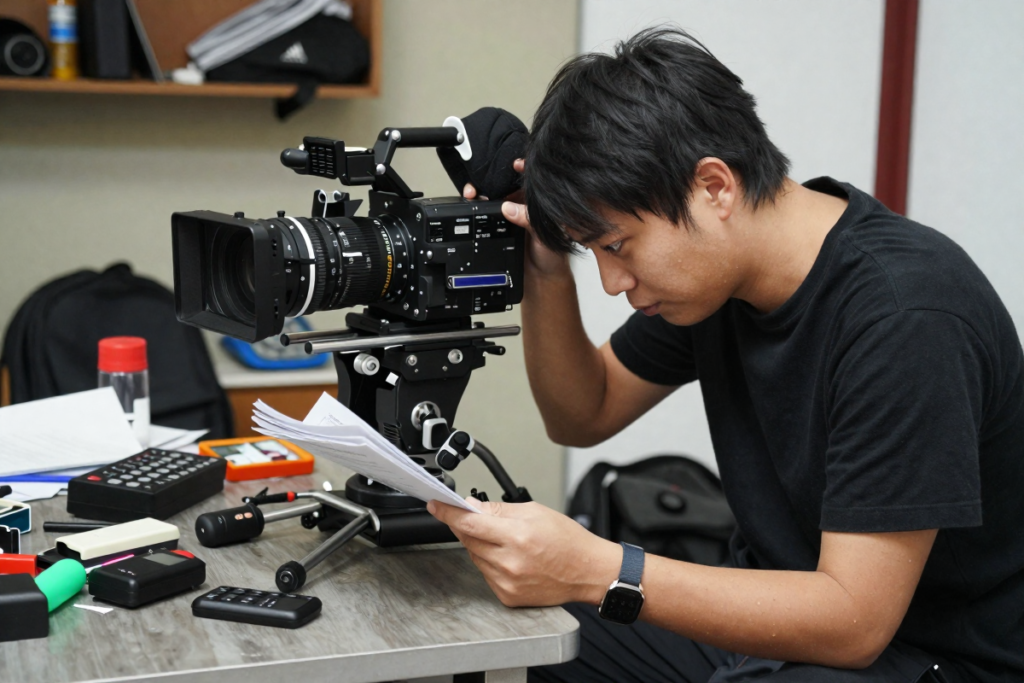
Budget Setup ($300–$800)
The goal here is covering every essential category without overspending on any single item.
| Gear | Recommendation |
|---|---|
| Camera | 📌 Sony ZV-E10 |
| Microphone | 📌 Rode VideoMic GO II |
| Tripod | 📌 Manfrotto Compact Action Tripod |
Mid-Range Setup ($800–$1,500)
When you’re ready to level up production value, these additions make a significant difference.
| Gear | Recommendation |
|---|---|
| Camera | 📌 Canon EOS R50 |
| Lighting | 📌 Neewer 660 LED Light Kit |
| Editing Software | 📌 DaVinci Resolve |
Frequently Asked Questions
What is the #1 mistake that ruins a first film?
Bad audio. Viewers will forgive imperfect visuals but will stop watching the moment they can’t clearly hear and understand dialogue. Invest in an external microphone before anything else.
Do I need expensive equipment to make a good first film?
No. Production value comes from lighting, composition, and storytelling — not expensive gear. A well-lit, well-composed shot on an entry-level camera will always outperform a poorly executed shot on a professional cinema camera.
What frame rate should I shoot my first film in?
Shoot at 24fps for a cinematic look. Use 60fps only if you plan to slow the footage down in post-production.
Should I make a short film or a feature film first?
Start with a short film, ideally under 15 minutes. Short films teach every skill a feature requires — but in a manageable, completable package. Finish something short and good before attempting something long.
What makes a student film look like a student film?
Usually a combination of: bad audio, center-framed shots, overlit or underlit scenes, and transitions that call attention to themselves. Fix these four areas and your film immediately looks more professional.
Final Thoughts: Your First Film Won’t Be Perfect — But It Must Be Finished
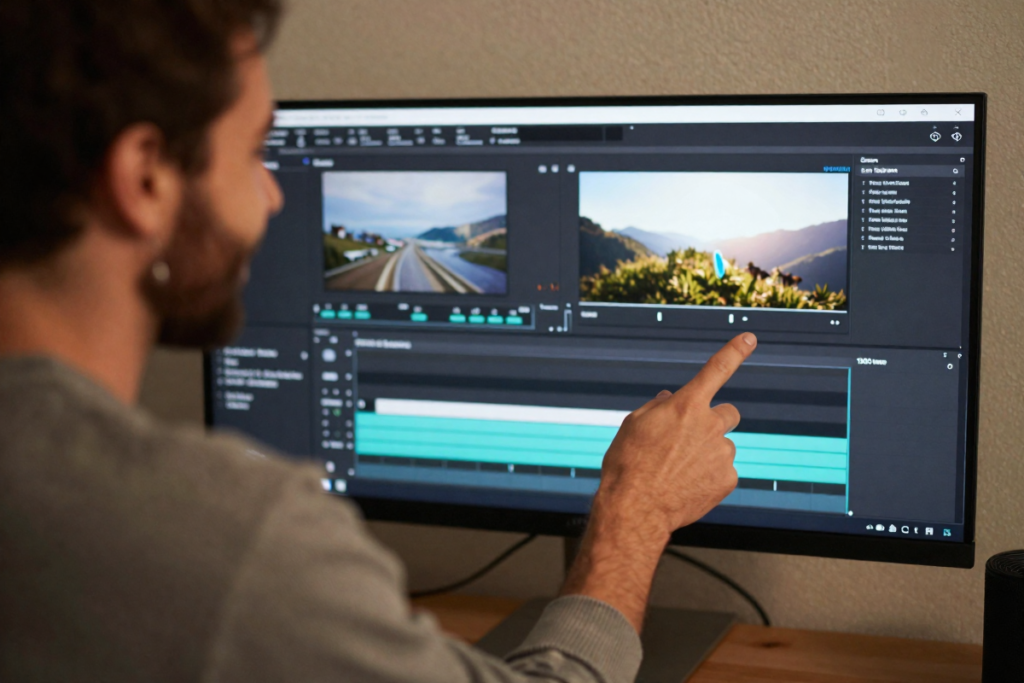
Every filmmaker you admire has a first film they’d rather forget. Steven Spielberg. Christopher Nolan. Ava DuVernay. They all started somewhere — and they all made rookie mistakes along the way.
The difference between filmmakers who grow and those who don’t isn’t talent. It’s finishing. Every completed film — no matter how rough — teaches you more than a hundred abandoned projects ever could.
Avoid the beginner filmmaking mistakes we’ve covered here. Plan your pre-production seriously. Invest in audio first. Learn your camera settings. Shoot coverage. And when the edit gets hard and the project feels overwhelming — finish the film.
Your first film is the price of admission to everything that comes next.
Ready to start? Stuck on how to come up with ideas? Check out this post on How To Come Up With Ideas Without A Big Budget .
Leave a Reply